0

Studio for Communication

Strategy and Design

Rebranding.

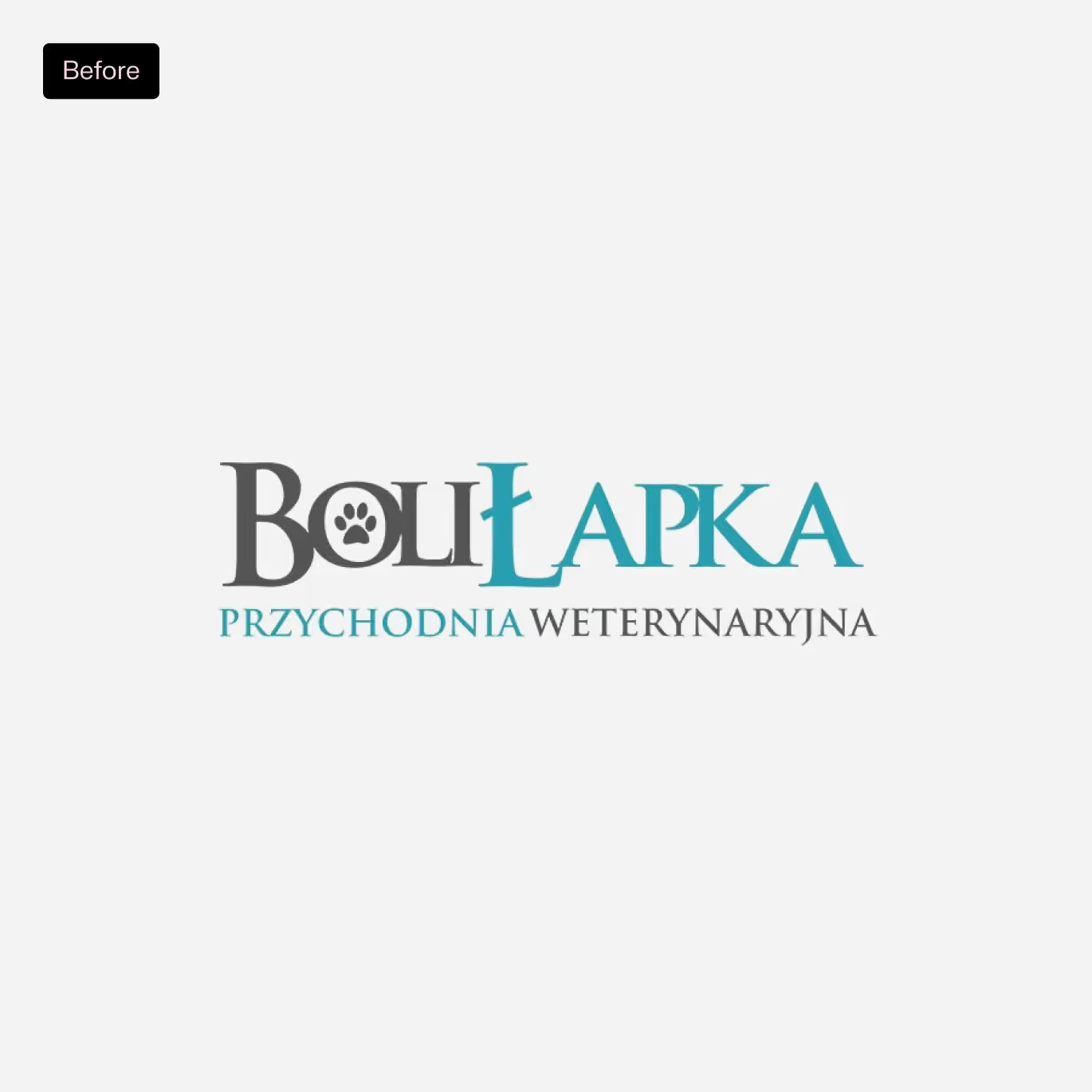
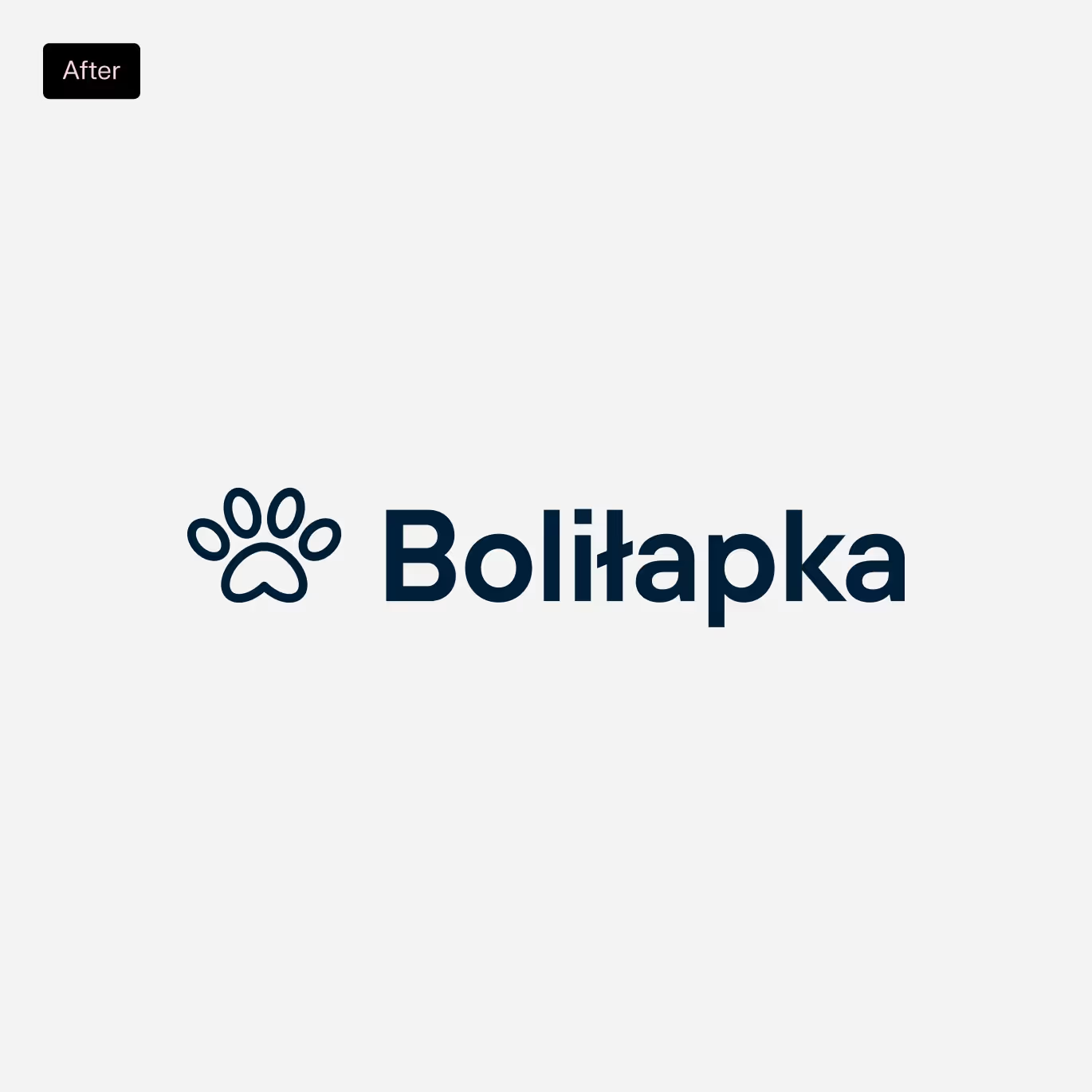
As it was, only better.

We help brands that have grown, matured or just drifted apart with the intention of communicating. Rebranding in our understanding is not a new badge, but a new order: consistency, topicality and credibility in the eyes of customers and the team. We design a change that works in documents, in sales, on the website and in social.

Why rebranding and when is the right time.

Brands rarely go bad overnight. They usually just stop being consistent over time. Supply, scale, market and people change. Sometimes, temporarily designed solutions from 20 years ago turn out to be used permanently - they seem to work, but they begin to interfere more and more.

Rebranding does not serve to break away from the past, but to bring the brand in order with itself. It's not about changing for the sake of change itself, about correcting the logo. It's about intelligibility, reliability and predictability at every touchpoint.
Rebranding in practice — organizes, gives credibility and coherence to the organization.

Rebranding is not a cosmetic — it is a well-thought-out, efficient system. We design change so that every person in the company knows how to speak, how to show and how to react. This is what we call Brand Coherency — the consistency between the promise and the reality of the brand.
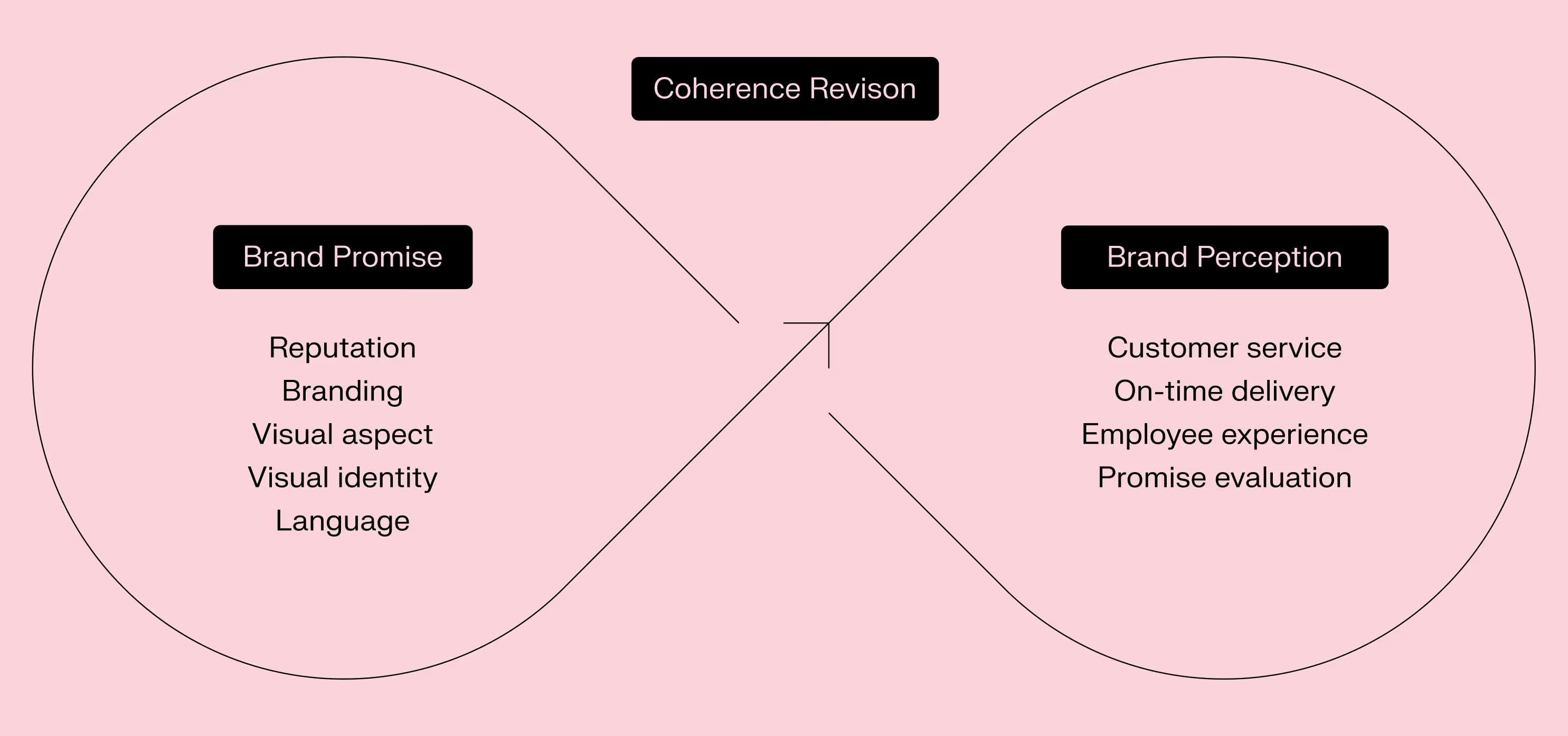
Thanks to it:

  • marketing and sales communication begin to speak with one voice,
  • each presentation looks like a part of a larger whole,
  • the team gains work tools that put the chaos in order,
  • Customers will understand more quickly who you are today and what really sets you apart.

The rebranding process

We don't start with the logo. We start by understanding how your brand works every day — in relationships, documents, conversations with customers, and within your organization. Our goal is to create a system that combines strategy, design and brand experience into one.

Process stages

01

02

03

04

05

06

Audit and
diagnosis of consistency

Strategy
and Message House

Visual and
linguistic system

Brand materials

Website —
A new brand in practice

Training and implementation
of Brand Coherency

We analyze current materials and brand behavior: website, offers, presentations, LinkedIn, internal communication. We figure out where the brand is losing consistency and what needs correction. The result is a diagnosis of Brand Coherency — a map of risks and priorities.

We sort out the meaning of the brand: why it exists, for whom it works, what promise it makes. We create a message house — an understandable, common language for sales, marketing and management. This is the foundation of any design and communication decision.

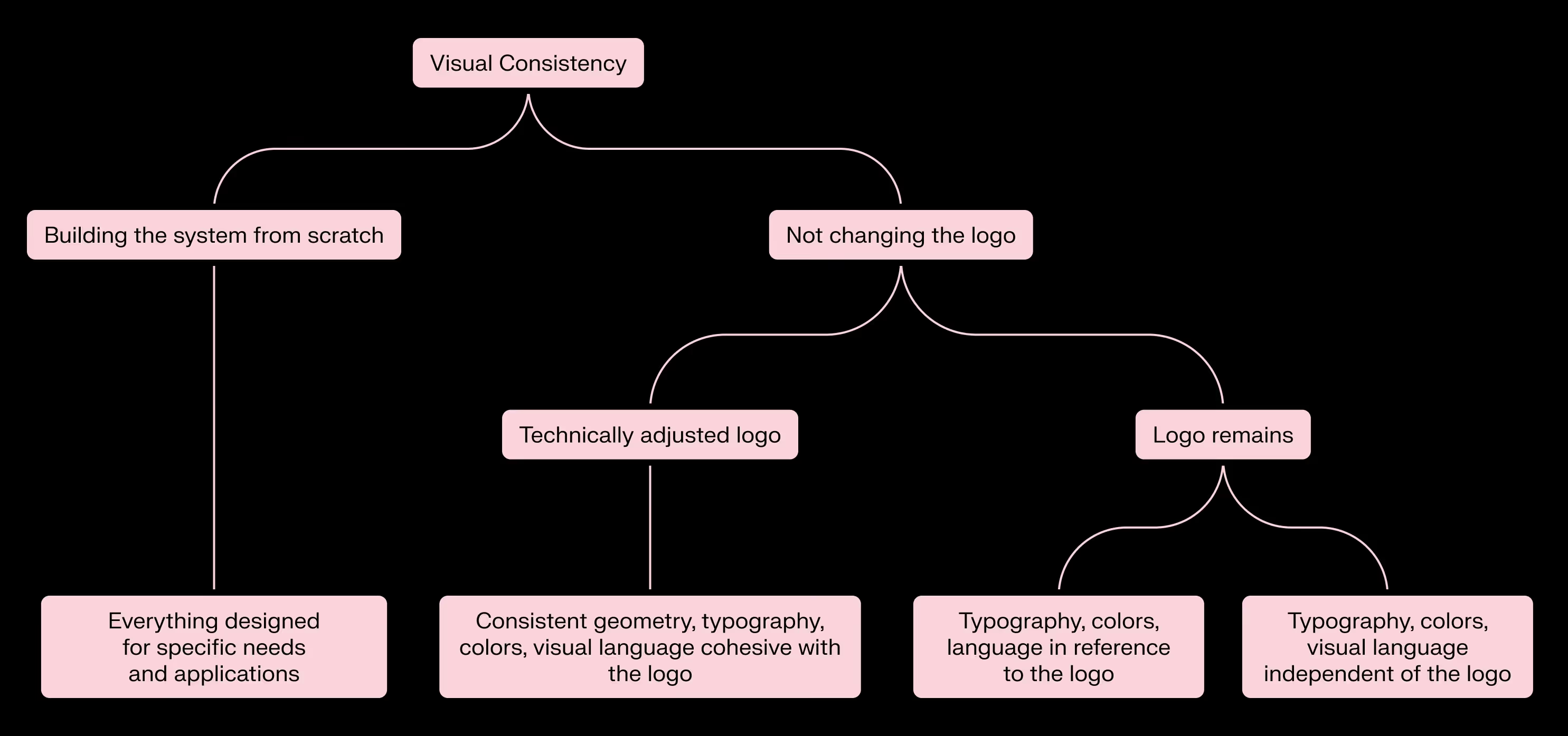
We design the visual identity and tone of the brand based on strategy. Sometimes it is a facelift and adaptation to modern applications, sometimes a new system from scratch. Every element — from the typography, to the colors, to the rules of writing — has a common DNA. A coherent system for development is created based on system design and communication principles.

Rebranding that works every day. We design a set of materials that build brand experience in real business situations:

  • commercial offers (product, service, partner variants),
  • sales and investor decks,
  • presentations by the management board and internal communications,
  • product cards, briefs, press releases,
  • Word templates, PowerPoint, PDF,
  • email signatures and footers, stationery, icon system and infographics.
  • LinkedIn and expert communication formats,
  • templates for posts, news, case studies and employer branding.

We develop formats and templates based on strategy, not random ideas. We define the language and the way of talking about the offer, prepare templates in Figma or Canva and sample entries and micro-copies for self-development.

Every document and every communication format is created in a single visual and linguistic system — the brand is consistent at every point of contact.

The effect? The brand sounds consistent — whether the CEO, the marketing department or the salesperson speaks.

The website is the first test of brand consistency.

We always implement it based on the strategy, the visual system and the language that was created in the rebranding process.

We do not treat it as a separate project — it is a communication tool that is supposed to work and build trust from the first contact.

In practice, the process includes:

  • concept and mockup of content — we define who speaks, to whom and for what purpose; we design the user's path to lead him to decisions,
  • UX and GUI design — we create a clickable mockup based on the brand's design system, with full responsiveness and WCAG compliance,
  • implementation in Webflow CMS technology — a modern, low-code system without the need for a server, plugins and updates; thanks to it, the brand gains full control over the content,
  • training of the team in the use of CMS — we provide a simple editing panel, thanks to which you can independently update content, publish new case studies, articles or blog entries.

The website is not a one-time project, but a living tool of the brand — an extension of its visual and linguistic system. Maintains consistency with documents, Office materials, and social media communications.

We hand over the system to the team and teach how to use it. We show you how to maintain consistency over time, how to react to new situations and how to develop materials according to the principles of the brand. We organically go from the “project” mode to the “we act” mode.

Etapy procesu

We analyze current materials and brand behavior: website, offers, presentations, LinkedIn, internal communication. We figure out where the brand is losing consistency and what needs correction. The result is a diagnosis of Brand Coherency — a map of risks and priorities.

We sort out the meaning of the brand: why it exists, for whom it works, what promise it makes. We create a message house — an understandable, common language for sales, marketing and management. This is the foundation of any design and communication decision.

We design the visual identity and tone of the brand based on strategy. Sometimes it is a facelift and adaptation to modern applications, sometimes a new system from scratch. Every element — from the typography, to the colors, to the rules of writing — has a common DNA. A coherent system for development is created based on system design and communication principles.

Rebranding that works every day. We design a set of materials that build brand experience in real business situations:

  • commercial offers (product, service, partner variants),
  • sales and investor decks,
  • presentations by the management board and internal communications,
  • product cards, briefs, press releases,
  • Word templates, PowerPoint, PDF,
  • email signatures and footers, stationery, icon system and infographics.
  • LinkedIn and expert communication formats,
  • templates for posts, news, case studies and employer branding.

We develop formats and templates based on strategy, not random ideas. We define the language and the way of talking about the offer, prepare templates in Figma or Canva and sample entries and micro-copies for self-development.

Every document and every communication format is created in a single visual and linguistic system — the brand is consistent at every point of contact.

The effect? The brand sounds consistent — whether the CEO, the marketing department or the salesperson speaks.

The website is the first test of brand consistency.

We always implement it based on the strategy, the visual system and the language that was created in the rebranding process.

We do not treat it as a separate project — it is a communication tool that is supposed to work and build trust from the first contact.

In practice, the process includes:

  • concept and mockup of content — we define who speaks, to whom and for what purpose; we design the user's path to lead him to decisions,
  • UX and GUI design — we create a clickable mockup based on the brand's design system, with full responsiveness and WCAG compliance,
  • implementation in Webflow CMS technology — a modern, low-code system without the need for a server, plugins and updates; thanks to it, the brand gains full control over the content,
  • training of the team in the use of CMS — we provide a simple editing panel, thanks to which you can independently update content, publish new case studies, articles or blog entries.

The website is not a one-time project, but a living tool of the brand — an extension of its visual and linguistic system. Maintains consistency with documents, Office materials, and social media communications.

We hand over the system to the team and teach how to use it. We show you how to maintain consistency over time, how to react to new situations and how to develop materials according to the principles of the brand. We organically go from the “project” mode to the “we act” mode.

What does it mean?

The result is consistency that builds trust and speeds up purchasing decisions.

Rebranding doesn't end with aesthetics — it starts with the organization of meaning. When a brand speaks with one voice, calm and predictability appear on the other side. This is brand resonance — the alignment between what you say, how you look and how you act.

Thanks to the implementation of the Brand Coherency system:

  • each offer is logical and consistent with the current image,
  • customers understand more quickly what you are an expert at today,
  • the team works on common principles and one set of templates,
  • a brand grows by order, not by noise,
  • Every presentation, document and post strengthens the image — rather than distracting it.

Let’s build a brand that truly works for your business.

Lena Mitkova

Creative In Chief°

Book a consult with Lena

Let's put your brand in order.

Let's talk about how to restore the coherence and timeliness of your communication and implement a system that connects the strategy, design and everyday life of the organization. During a short consultation we will indicate the best start: audit, facelift or full rebranding.

View our projects

FAQ

Frequently Asked
Questions

The simplest test: if the company's materials don't fit together, customers don't know exactly what you do, and the team uses several different versions of logos and presentations — it's time to rebrand. It is not about fashion or new colors, but about recovering the coherence and timeliness of the brand with respect to who the company really is today.

No. In some cases, the logo stays — everything around it changes: language, typography, layout of materials, colors, tone of communication. Sometimes we only do a facelift — that is, adapting the existing mark to modern standards and applications.

Whether the logo needs to be changed is decided after a consistency audit and analysis of the functionality of the current system.

Typically 8—12 weeks, depending on the range.

The first stage is the audit and strategy, then the visual system, brand materials and implementation.

In the case of a new website or an extensive Office/SoMe system, the process can take 3 to 4 months, but it is carried out in stages - each phase ends with a specific result.

Yes. We always work so that the company can operate on an ongoing basis.

During the process, we successively implement new elements: first presentations and offers, then the website, and finally social media. Change does not have to be “overnight” — it is often better to introduce it smoothly and without the risk of losing recognition.

Ideally 2-4, with workshops, meetings and consultations to get to know the whole organization well - so as to collect the most complete data possible. We need a board representative (for strategic decisions), someone from sales and/or marketing and possibly someone who will later maintain the brand in daily communication. We do not require regular meetings — the key is a workshop at the beginning, several interviews and a final discussion of the system in full.

Full, functional brand system at each of the contacts with the recipient. The system can be very roomy, but usually includes:

  • logo files and visual library,
  • brandbook or design system in Figma,
  • set of Office and SoMe templates,
  • language guidelines (tone of voice),
  • and training in the operation and maintenance of the system.

Thanks to this, the team is able to maintain consistency on its own — without the need to involve the agency for every minor adjustment.