0

Studio for Communication

Strategy and Design

Brand strategy.

Before a brand can speak, it needs to know what it has to say.

We help companies and organizations understand the meaning of their brand — before moving on to logo design, identification or communication.
Strategy is not a document. It is a system of decisions that allow the brand to act consistently, effectively and for something.

Why you need a brand strategy

Most brands start with design.
But without strategy, design doesn't know what to express.
Therefore, instead of thinking about color and font, we start with questions: why does the brand exist, for whom and what promise does it make to the audience?

Brand strategy is the most underrated tool in business.
It's not about big words, but about order — about the team knowing how to make decisions, how to react and how to talk about the brand in everyday situations.
What is brand strategy in practice

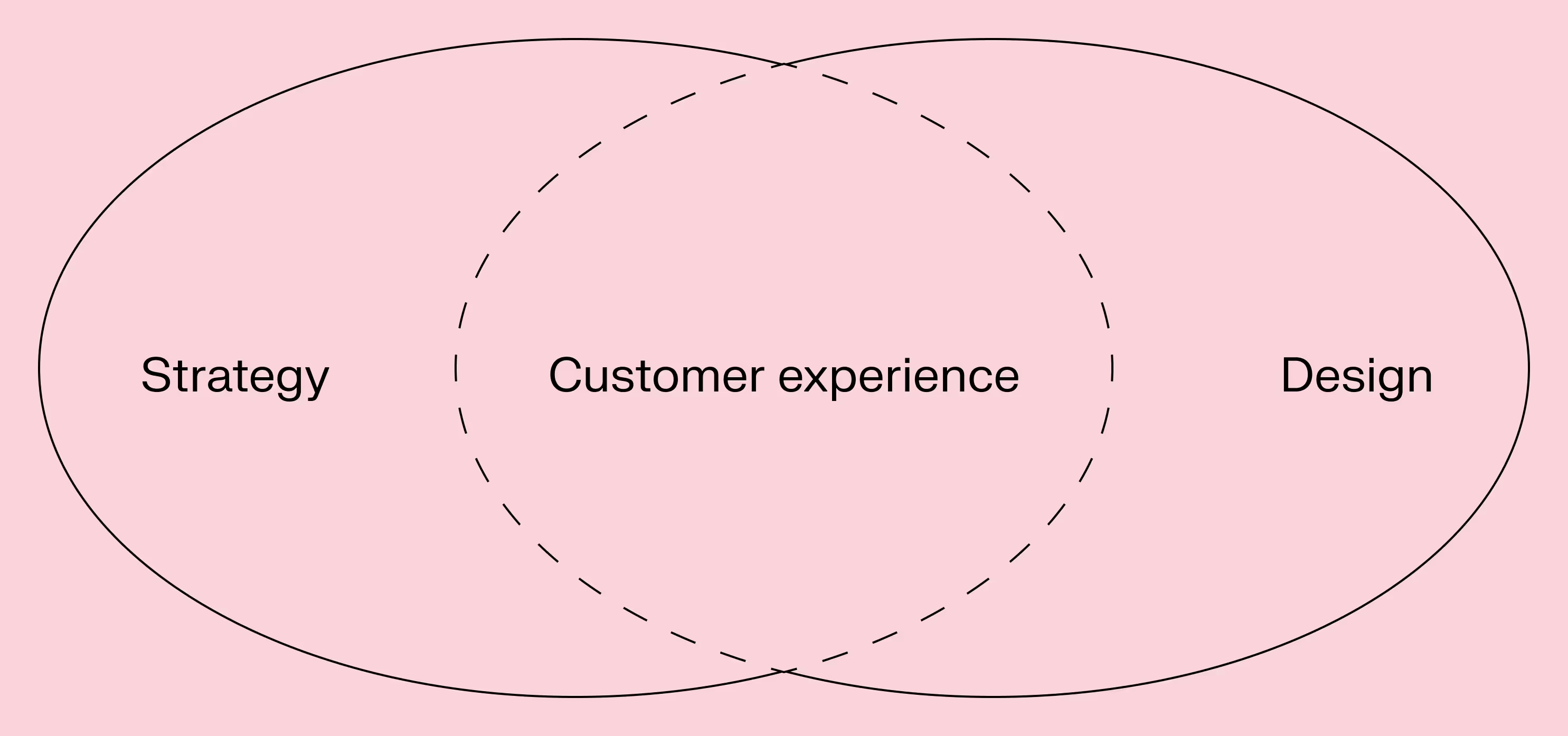
Brand strategy is the way a company thinks, speaks and acts — in a way that is consistent and recognizable.
It is a plan that organizes not only communications, but also operational decisions.
A good strategy is not a presentation, it is a tool that the whole team knows — it is the reference point for all branding, offer, sales activities and customer relations.

At LNV°ST, we understand strategy as the core of the brand, not an addition to the visual design.
It is she who sets the direction, meaning and tone of everything that the brand later shows the world.

Not every strategy looks the same.
We think differently about a corporate brand, differently about an NGO, a startup or a cultural brand.
In any case, the strategy should answer one question: what should happen in the recipient's head and emotions after contact with the brand.

In practice, we distinguish several types of strategic approaches:

  • Corporate strategy — organizes the architecture of brands and relationships between products, companies, departments.
  • B2B strategy — focuses on rationality, credibility and predictability of the brand.
  • NGO and culture strategy — gives meaning, authenticity and a language of engagement that does not sound marketing.
  • Personal or expert brand strategy — builds leadership and authority in the niche.

Regardless of the type, any good strategy is understandable, actionable and sustainable over time.
It doesn't need metaphors — it needs a common denominator that everyone in the organization can repeat in their own words. That is, first of all — a full understanding of what our brand really is and how we can work with it.
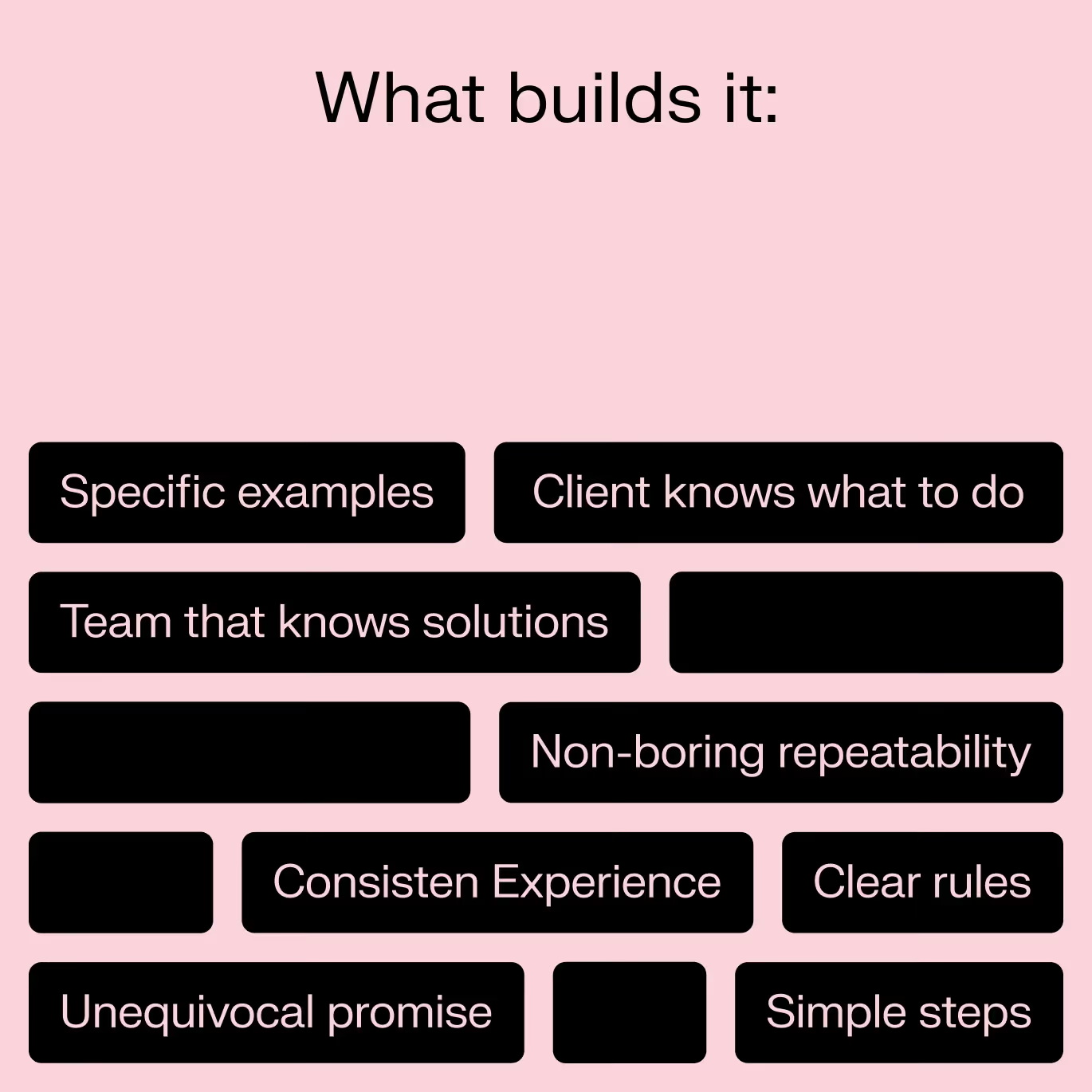
Strategic process

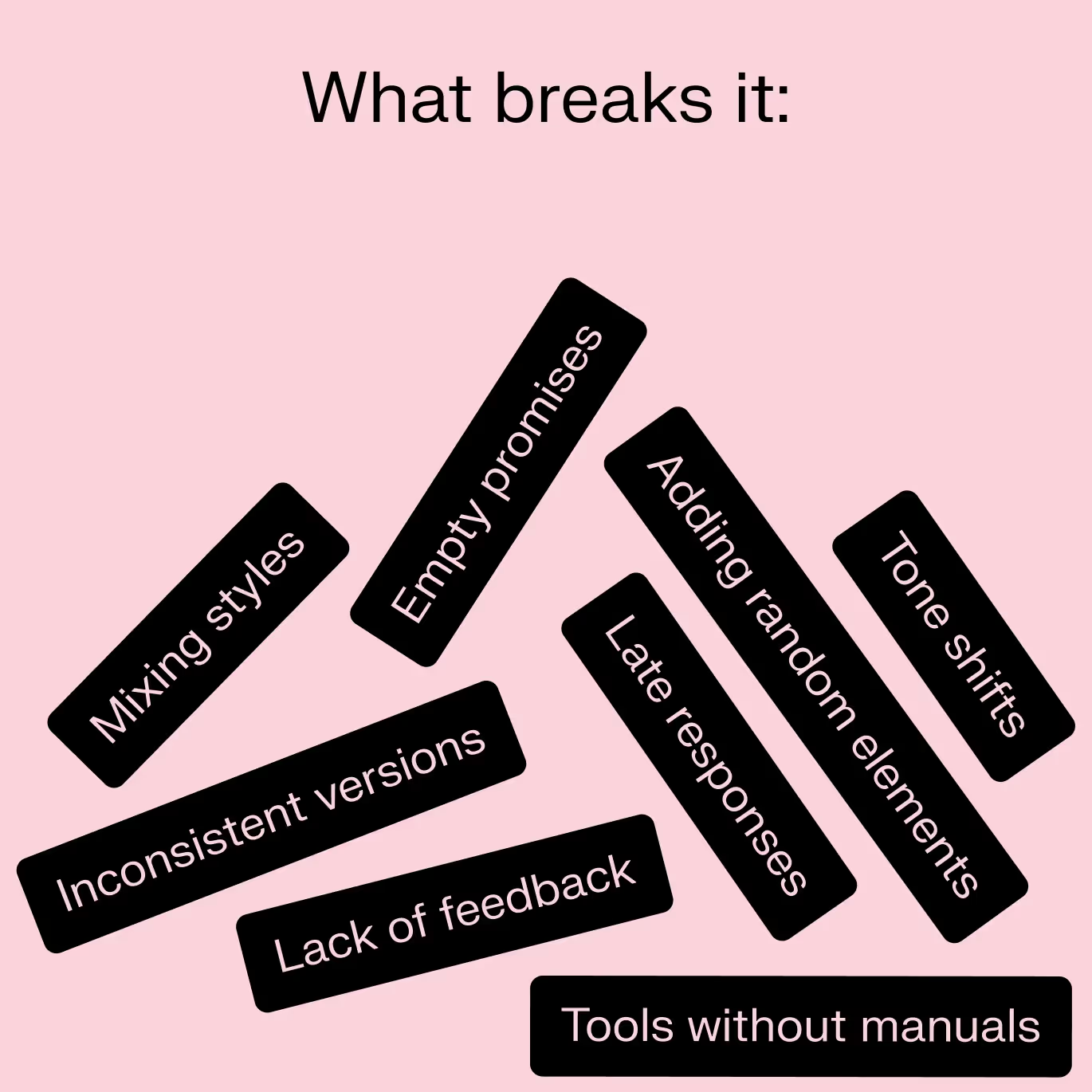
We don't believe in a strategy created in a vacuum. The brand strategy is created in dialogue — with the team, with real customers, with what the brand already communicates today (even if unconsciously). We start with the sense, we end with the tools.

Process stages

01

02

03

04

05

06

Brand Context Analysis

Strategic workshop

Brand definition

Positioning and
Message House

Communication and
experience strategy

Creative Brief and
the foundation of branding

We start by recognizing the situation of the brand: its communication to date, materials, offer, market, competition and the way it is perceived. We check what is already working, what is unclear, and what needs to be sorted out. It is a stage that allows you to see the brand not through the prism of declarations, but the real signals that it sends to the audience.

The strategy is created in dialogue, which is why we work with the team, the management or the key people responsible for the brand. We organize knowledge, tensions, ambitions and different perspectives within the organization. This is the moment when we gather the business, communication and emotional context to understand what a brand really is and where it should lead.

We develop the core of the brand — its meaning, promise, unique value proposition, personality traits and tone of communication. This is the moment when we determine what a brand really is, what it is supposed to mean and what role it has to play for its audience.

We organize the place of the brand in the market, its advantages, arguments and main messages.

This is where the Message House is created — a structure that organizes the brand's language and helps to speak coherently in every context.

Strategy does not end with words. We check how the brand behaves in practice: in customer service, in social media, in offers and on the website

We create principles that combine marketing, sales and user experience into one cohesive brand experience.

Based on the strategy, we create the foundation for branding — defined aesthetic, linguistic and narrative directions. Thanks to this, branding is created from meaning, not from likes.

In practice, the brand strategy should:

  • combine the language of management, marketing and sales,
  • organize documents, offers and communications,
  • be the point of reference for any communication decision.

That is why our strategic processes end with a system and not with a presentation:Message House, language guidelines, customer experience maps and a list of priorities that the brand implements step by step. This is a practical strategy that stays in the organization for a long time.

Etapy procesu

We start by recognizing the situation of the brand: its communication to date, materials, offer, market, competition and the way it is perceived. We check what is already working, what is unclear, and what needs to be sorted out. It is a stage that allows you to see the brand not through the prism of declarations, but the real signals that it sends to the audience.

The strategy is created in dialogue, which is why we work with the team, the management or the key people responsible for the brand. We organize knowledge, tensions, ambitions and different perspectives within the organization. This is the moment when we gather the business, communication and emotional context to understand what a brand really is and where it should lead.

We develop the core of the brand — its meaning, promise, unique value proposition, personality traits and tone of communication. This is the moment when we determine what a brand really is, what it is supposed to mean and what role it has to play for its audience.

We organize the place of the brand in the market, its advantages, arguments and main messages.

This is where the Message House is created — a structure that organizes the brand's language and helps to speak coherently in every context.

Strategy does not end with words. We check how the brand behaves in practice: in customer service, in social media, in offers and on the website

We create principles that combine marketing, sales and user experience into one cohesive brand experience.

Based on the strategy, we create the foundation for branding — defined aesthetic, linguistic and narrative directions. Thanks to this, branding is created from meaning, not from likes.

In practice, the brand strategy should:

  • combine the language of management, marketing and sales,
  • organize documents, offers and communications,
  • be the point of reference for any communication decision.

That is why our strategic processes end with a system and not with a presentation:Message House, language guidelines, customer experience maps and a list of priorities that the brand implements step by step. This is a practical strategy that stays in the organization for a long time.

What follows from this?

The effect is a brand that makes sense — and consistency.

The brand strategy organizes communication, saves time and increases the effectiveness of all actions. Instead of a thousand ideas and opinions, there is a common language that everyone in the organization can apply.

With the strategy:

  • you know what branding you need and what it should express
  • branding has a clear direction and meaning,
  • the team knows how to talk about the brand, without improvisation,
  • communication becomes coherent and understandable,
  • your customer recognizes the brand and its value faster,

Let’s build a brand that truly works for your business.

Lena Mitkova

Creative In Chief°

Book a consult with Lena

Let's start with the sense.

Let's talk about how to organize your brand and create a system that will give it consistency and direction.During a free strategic consultation, we will evaluate where it is best to start: an audit, a workshop or a full process.

View our projects

FAQ

Frequently Asked
Questions

Always from talking and gathering context. We analyze how the brand functions today — what communication looks like, what sales materials say, how recipients react. Based on this, we define what you really need: an audit, a strategic workshop or a full process with research and positioning. If we prepare a strategy for a new brand, we rely on business assumptions and market recognition.

Not always. In many cases, in-house workshops and analysis of what you already know about your customers are sufficient.

However, if a brand operates in a competitive or diverse market, we recommend qualitative research or desk research to make decisions based on facts, not hunches. In practice, each time we adjust the method to the scale of the project.

On average, 4—8 weeks, depending on the number of workshops and the level of complexity of the organization. During this time we go through analysis, workshops, brand core development, positioning and message house. In large companies with an extensive decision-making structure, the process can take up to 10-12 weeks, but we always work in stages, with visible results along the way.

Nie w całości — ale wymaga przeglądu. Dobrze opracowana strategia pozostaje aktualna przez kilka lat, jednak co 12–18 miesięcy warto zrobić krótką diagnozę: czy rynek, zespół lub oferta nie przesunęły się w inną stronę. To nie reset, tylko aktualizacja priorytetów i komunikatów. Traktujemy strategię jak system — żywy, rozwijany, reagujący na zmiany.

No — it should be a tool for work, not a presentation. In practice, it is part of the brand documentation. However, it is crucial that everyone in the organization knows it and knows how to apply it. The result of the process in LNV°ST is not just a report, but a set of practical tools: message house, language guidelines, customer experience maps and a list of implementation priorities.

The strategy becomes the reference point for all communication, branding and sales, not a file that is put in the “strategies” folder.

Strategy is the starting point — never the end of the process.

After completion of the work, we proceed to the implementation phase: development of branding, communication system, website or brand materials.

We can also carry out internal training so that the whole team understands the assumptions and can speak one language. The strategy is effective only if it begins to live in the daily work of the brand.