Such a decision goes hand in hand with: a subtle change and… an enormous amount of painstaking work. It's like renovating a house under the supervision of a conservator. Our task then is to precisely refresh the existing mark, improve the lettering, correct proportions, organize the symbol, and adapt the logo to contemporary media and standards.
This is a change that the audience often can't name. But – they can usually feel it – or, to put it plainly – they stop feeling discomfort. What's more, if we were to ask the audience to examine it closely and try to describe something in their own words, we would be surprised how many issues they could identify and articulate.
They just see that the brand suddenly looks better: cleaner, more confident, more contemporary, more professional. This is precisely the power of a well-executed soft refresh. It simply makes the brand finally function as it should.
When do we opt for a refresh?
A soft refresh is particularly important for heritage brands, institutions, local, cultural, family, craft, and territorial brands. In these cases, the mark is not just an element of identification, but also a carrier of memory. Sometimes it bears the trace of an author, an era, a local context, or a previous quality that should not be treated as an error to be removed.
A good refresh does not remove this layer. The task is to organize – improve legibility, refine proportions. But above all: to eliminate technical imperfections, ensure optical balance, and prepare the mark for contemporary use: from banners to favicons, from print to animation, from official documents to social media. Typography and scalable marks function within a specific context – scale and reproduction method – these elements are inseparable from their design.
The Role of Letters in a Logotype
In a logotype, a letter is not just a letter. A letter in a logo must simultaneously be legible, memorable, function at a small scale, build character, and withstand multiple uses in various contexts.
A modern letter in a logo should meet several conditions:
- Legibility at various scales
A logo must work well both in large formats and in very small applications. Letters cannot break apart in print or turn into a gray blur on screen. - Optics over Geometry
In typography, precision does not mean mathematical equality. The quality of a logotype is primarily determined by optical balance: the way the eye perceives the weight of letters, the rhythm of spacing, the proportions of curves, verticals, and internal counter-spaces. Only optical correction makes a mark stable, legible, and natural in perception. - Brand Character
Letters in a logotype are not a neutral representation of a name. Their construction, proportions, spacing, weight, and detail influence whether a brand is perceived as more technical, expert, elegant, accessible, artisanal, or expressive. This is precisely why typography should stem from the brand's positioning and character, not from current visual trends. A well-designed logotype not only identifies a brand but also communicates its temperament. - Systemic Functionality
A logo does not exist in isolation. It must work in conjunction with the symbol, system typography, color, layout, motion, sales materials, packaging, website, and documents.
Optical adjustments: the work you don't notice until it's missing
A soft refresh of a logo often involves working on details that seem microscopic to an outsider. Slight thickening of a stroke. Subtle opening of a counter in a letter. Shortening of a tail. Changing the angle of a terminal. Shifting an accent. Softening the contrast. Redrawing an arc that was technically correct but optically dead.
In practice, this involves painstaking work on curves, vectors, proportions, and variations of the mark. It's often supported by typography specialists, lettering designers, and people who can see things invisible to the rest of the world: rhythms and balance between shapes and negative space, the tension of an arc, false verticals, overly heavy details, and counters that 'choke' a letter.
Example: OTOP and respect for the existing mark
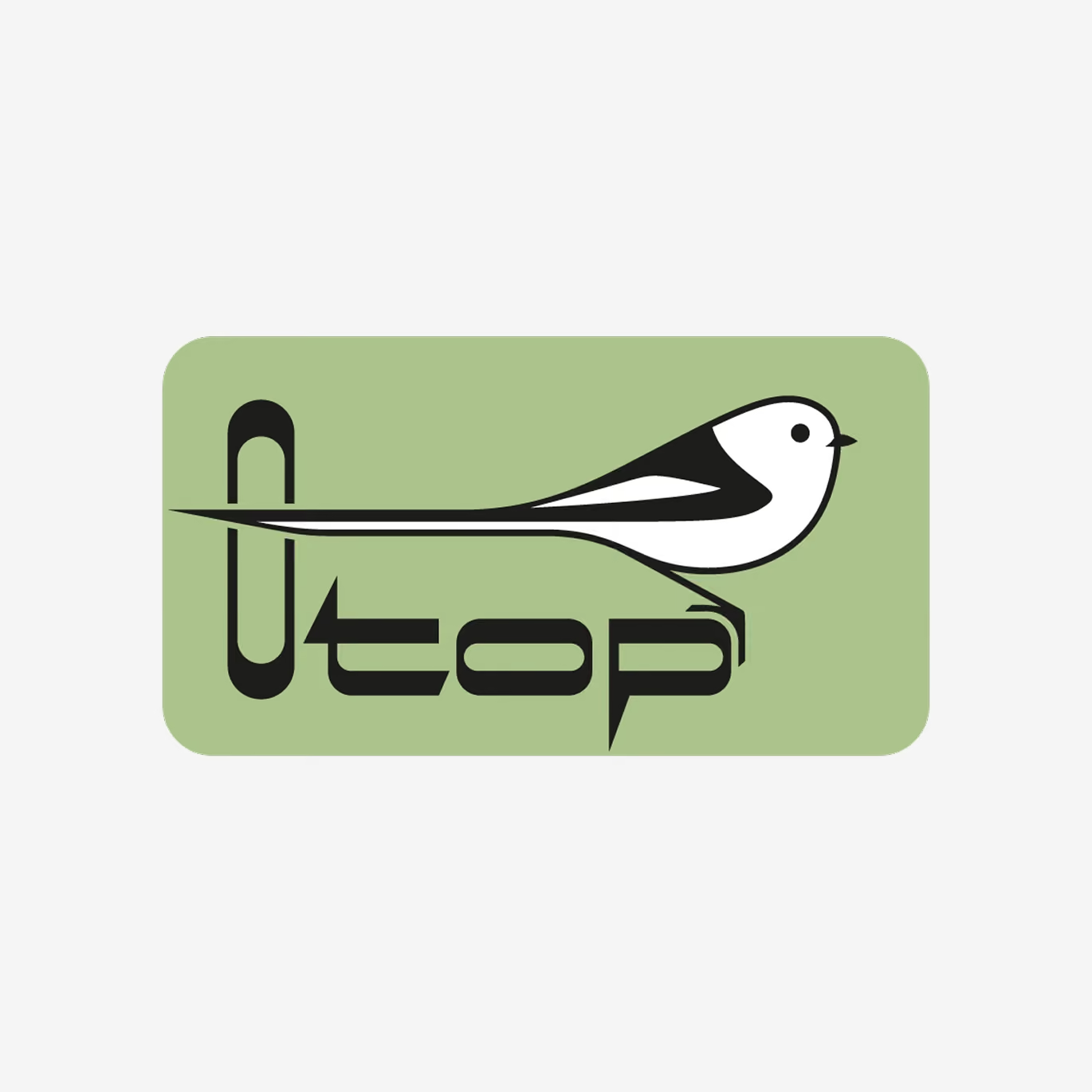
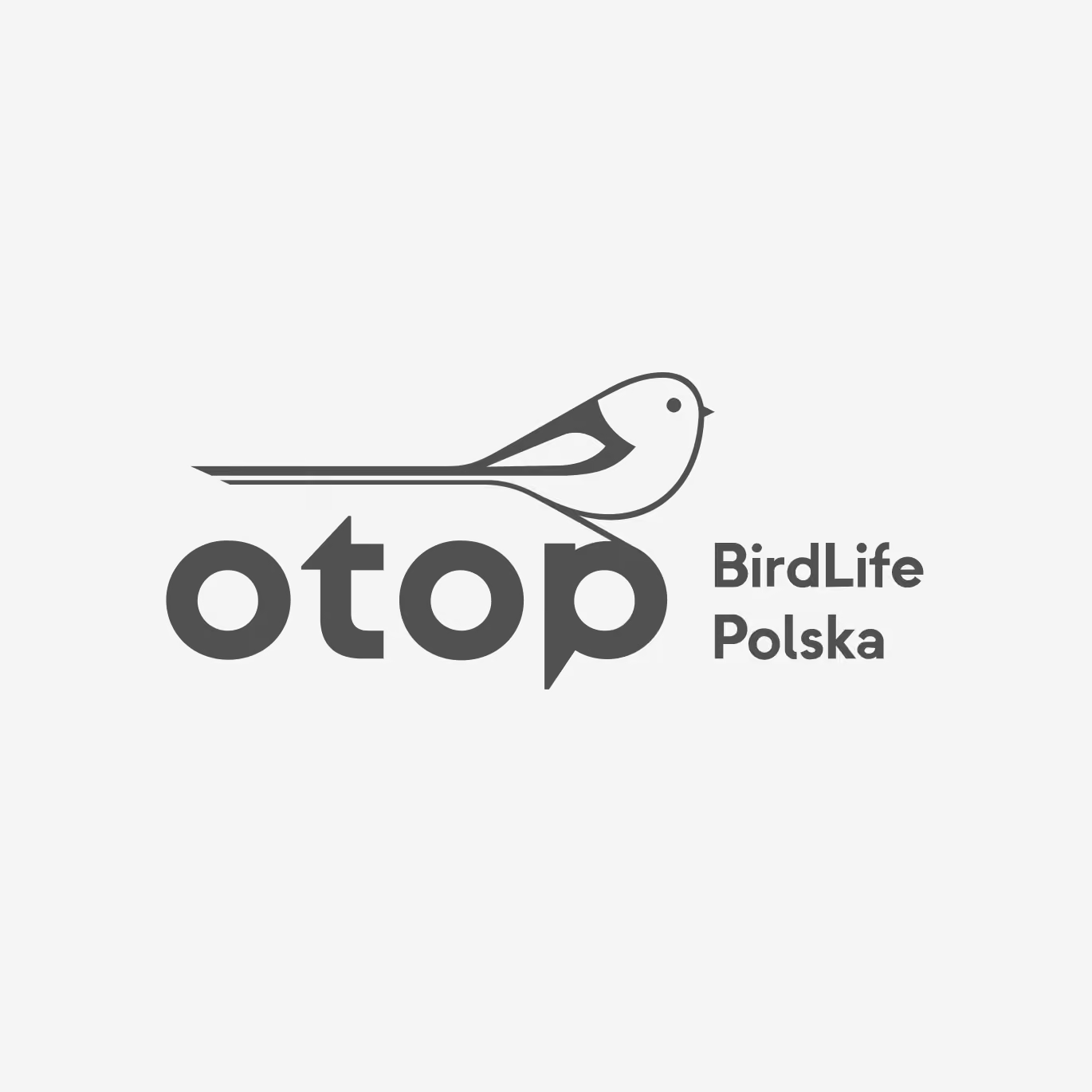
The Polish Society for the Protection of Birds approached us to refresh their logo and build a visual identity.
The previous logo was created by Professor Jerzy Desselberger, a designer and ornithologist, and the organization's members were strongly attached to the long-tailed tit he designed.
In this case, the soft refresh involved retaining the recognizable bird motif, but translating it into a more functional visual language. We developed a new, simplified silhouette of the long-tailed tit. We balanced the mark and adapted it for legibility in print and on screens. This was a particularly unique project because we even consulted ornithologists about the bird's details. Indeed, even synthesis can sometimes require very specific substantive knowledge.
Example: Karmello and the 'K' logomark
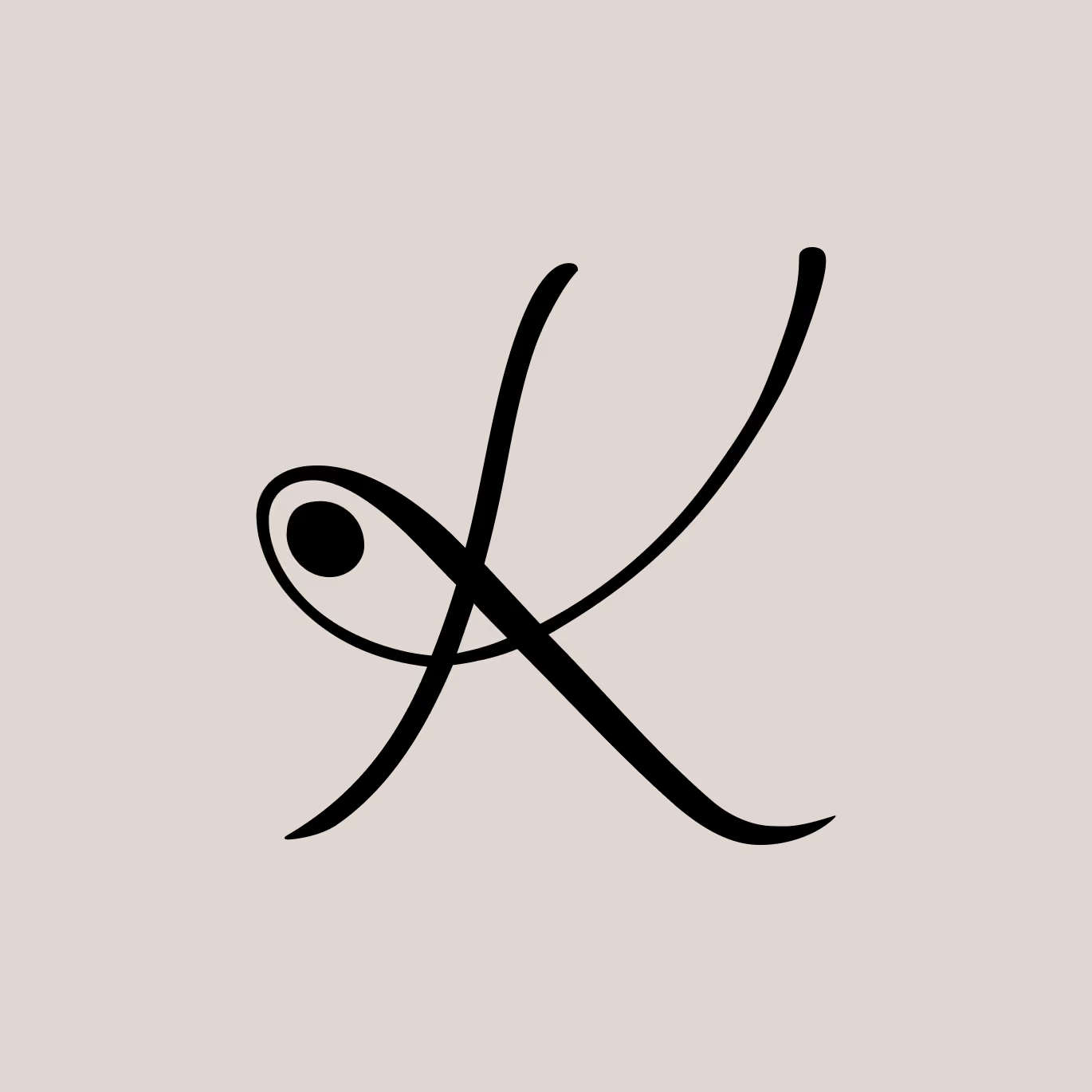
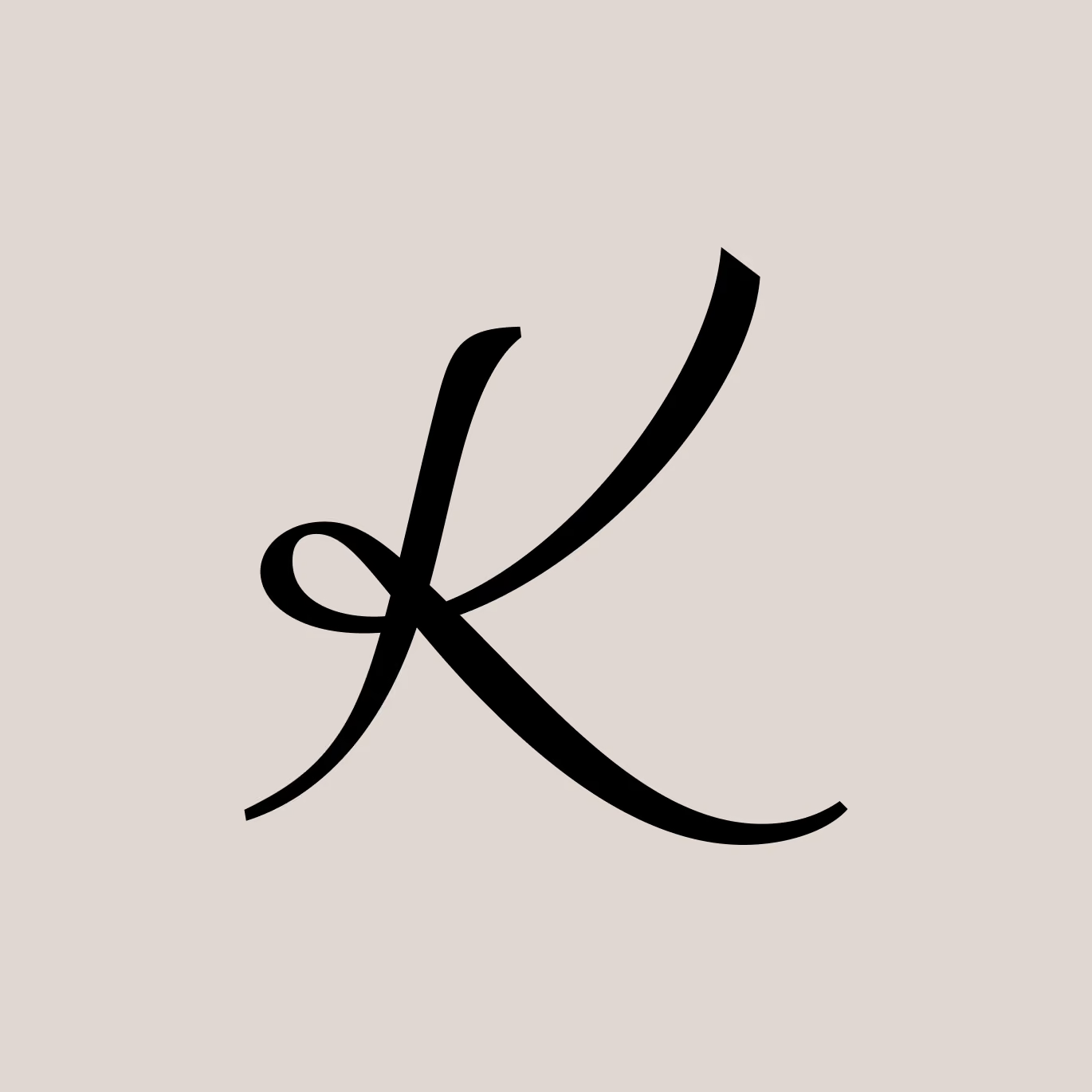
For product brands, especially those that appear on packaging, labels, cartons, stickers, social media, and sales materials, a logotype isn't always enough. A brand needs a shorthand. A mark that can function as a seal, an initial, a packaging detail, an embellishment, and a quick identifier.
In this context, a logomark based on the letter 'K' is more than just a symbol – it's a functional system tool.
Collaboration: Dr. Borys Kosmynka
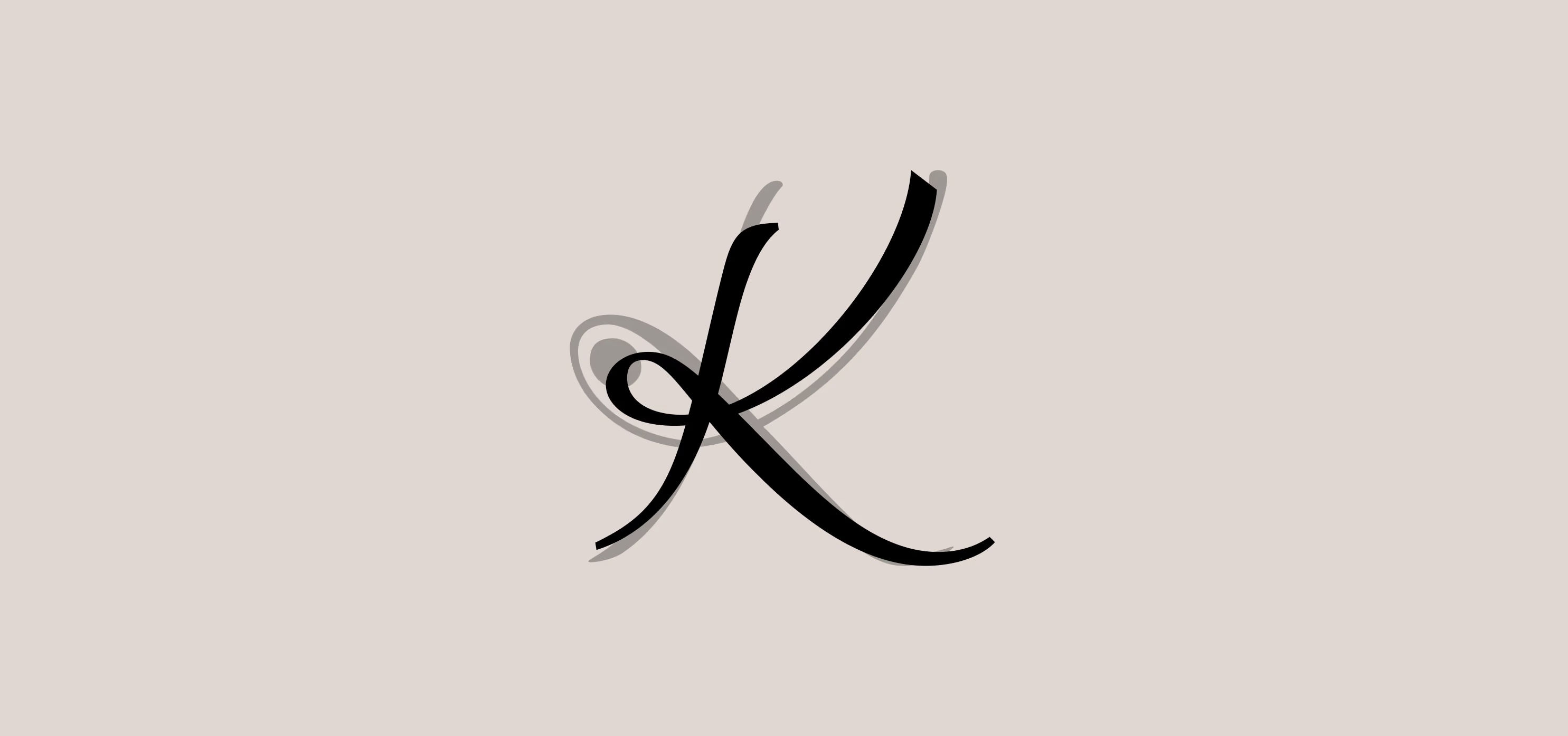
The typographic work on such a logomark involves ensuring it is drawn in a perfectly harmonious way. It must have its own weight, proper proportions, consistency with the logotype, appropriate contrast, and character. It should be simple enough to work at a small scale, yet distinctive enough not to become an anonymous initial.
Example: Kinoteka and typography as a conveyer of atmosphere
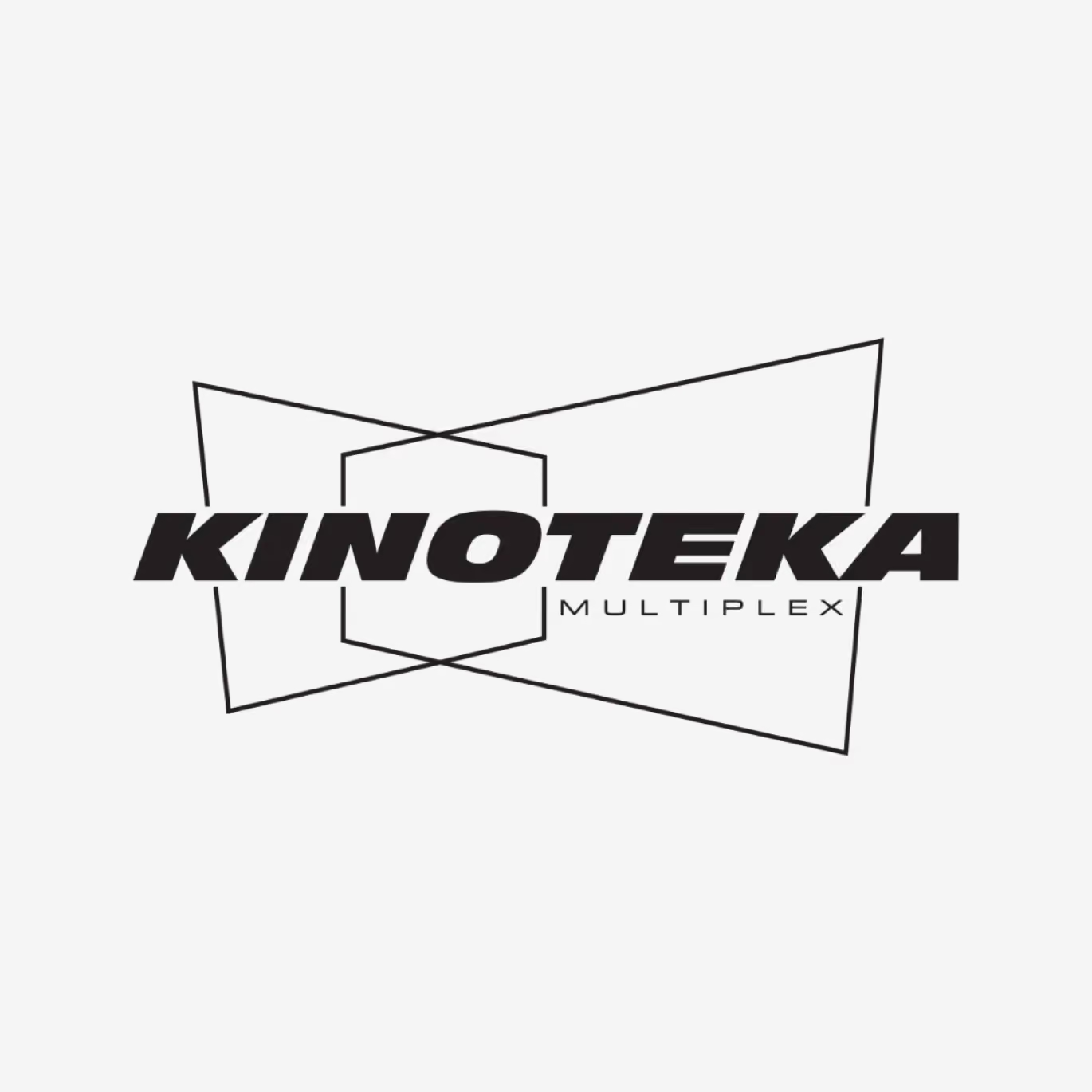
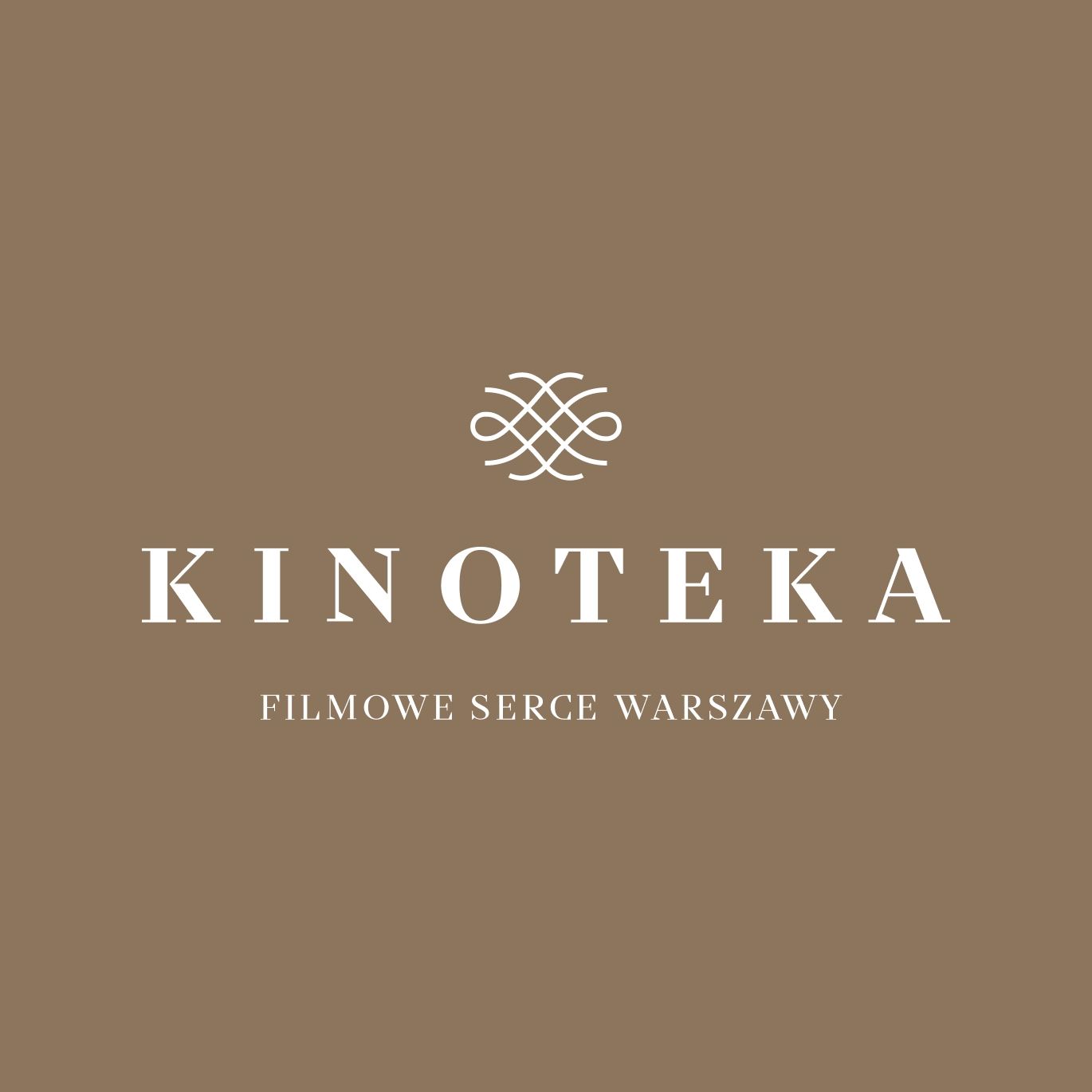
In the case of Kinoteka, an iconic Warsaw cinema located in the Palace of Culture and Science, we honored two aspects.
Firstly, in the logo, we traced an ornamental element derived from a characteristic feature of the unique location where the cinema is situated. This detail appears in the cinema's interiors.
Secondly, again, the location. Kinoteka operates within the Palace of Culture and Science, a site under conservation protection with its own historically established architectural and visual order. In 2016, Kinoteka's previous neon sign (along with its old logo, a strong accent from the early 2000s) was dismantled precisely because it did not align with the Palace's other illuminated signs: it was too dominant, obscured architectural elements, and functioned more like an independent advertisement than a part of the building. According to conservation guidelines, the new neon sign was to be subordinated to the logic of the Palace of Culture and Science: it had to consist solely of three-dimensional, illuminated letters, be placed within an appropriate architectural field, and harmonize with other neon signs, such as those for the Museum of Technology, Studio Theatre, or Congress Hall.
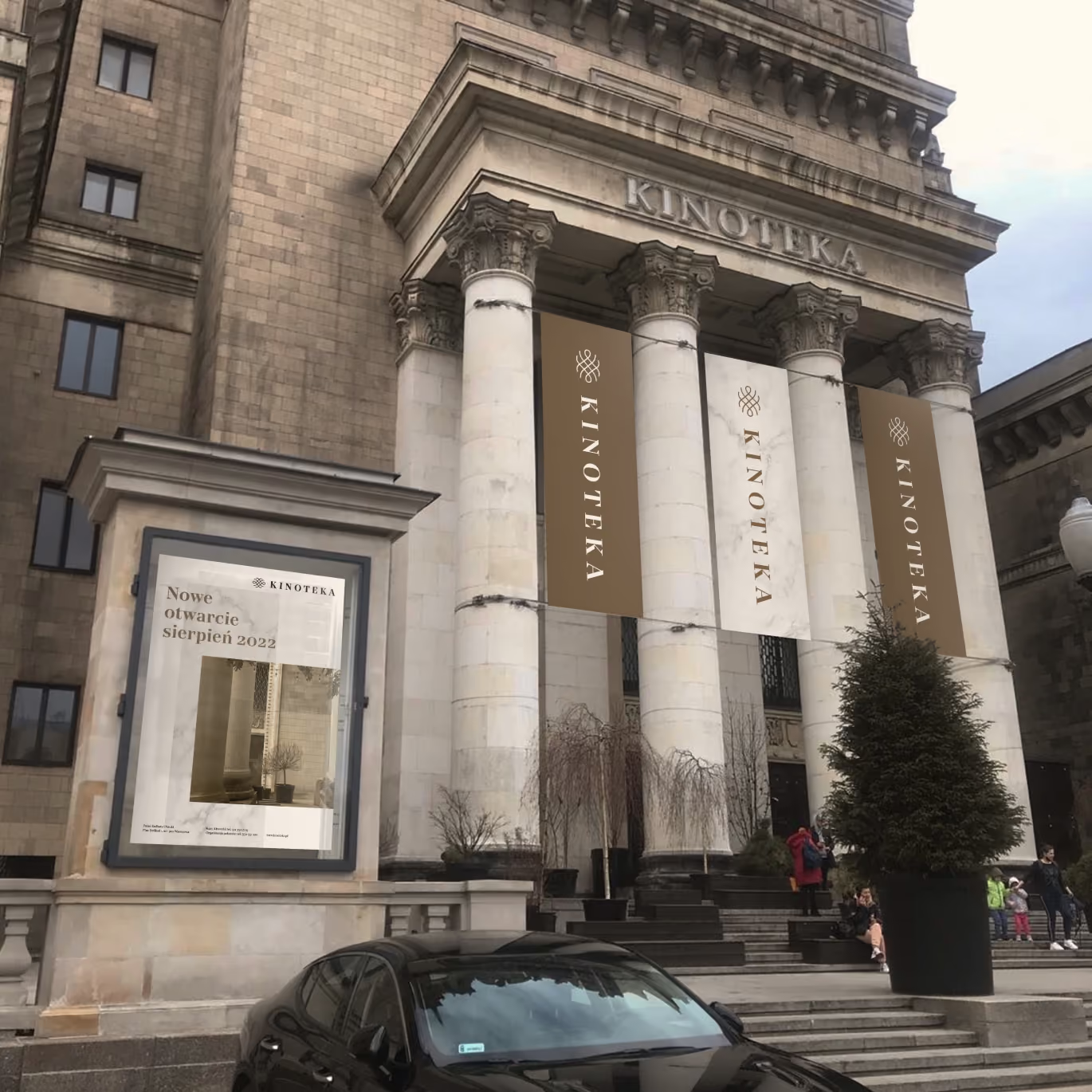
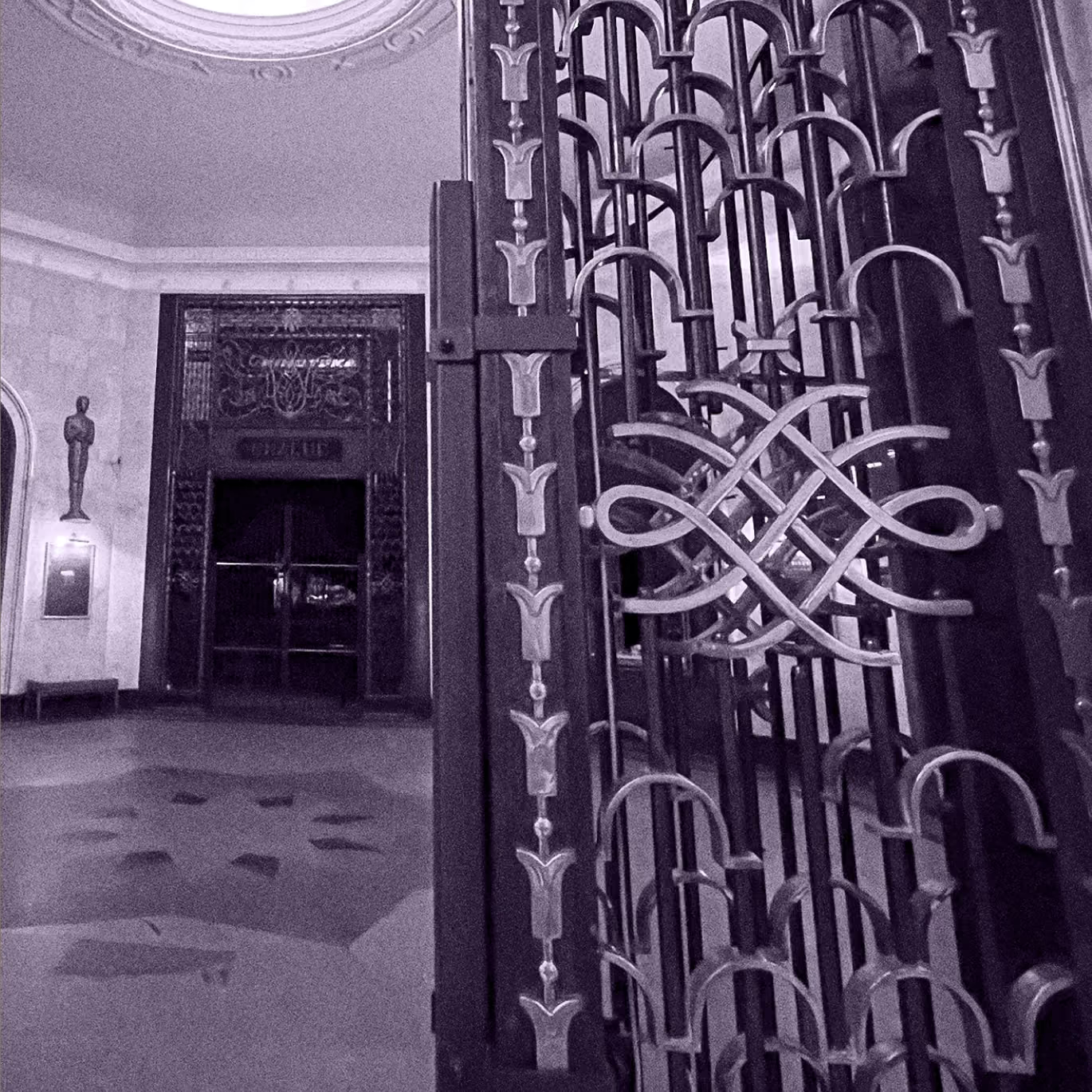
Therefore, when designing Kinoteka's logotype, we did not seek a sign that would contrast with the neon on the facade. The entrance signage exists and will continue to exist, regardless of our branding. We decided that since the brand operates in such a specific, historical location, its identity should stem from the character of that place. The entrance neon thus became our point of reference. We preserved its essential character, organizing and modernizing the typography where needed: improving proportions, letter rhythm, and the optical balance of the sign. As a result, the logo does not compete with the architecture of the Palace of Culture and Science; instead, it extends its language within the identification system.
Redrawing insignias: not autotrace, but interpretation
A separate aspect of modernizing visual identity is the redrawing of signs, coats of arms, illustrations, and historical forms. This work differs from designing a new symbol from scratch. Here, the source material already exists, but it is usually not ready for contemporary use.
It might be too detailed. It might not work well at a small scale. It might have accidental curves, uneven spacing, lines that are too thin, illegible details, or it might only be available as a raster image, scan, illustration, coat of arms, old file, or a sign used for years in many inconsistent versions.
Redrawing is not about mechanically tracing an outline. It's about making decisions: what to keep, what to simplify, what to emphasize, what to interpret, where to preserve character, and where to remove noise. It's a process between conservation and design. Simply put: we often receive an "automated" way of redrawing material, but we need to develop a designed, intentional one.
A good redrawing of a sign must meet several conditions:
- Maintain the recognizability of the original
The recipient should feel continuity. The sign should be "the same," just better. - Improve functionality
The new version must work across various scales, techniques, and media. - Establish a hierarchy of detail
Not everything that exists in the original must be equally important. Some details build character, while others only hinder it. - Create usable versions
Often, a full, simplified, small, monochrome, horizontal, vertical, digital, or print version is needed. - Don't smooth out the history completely.
In heritage-based designs, a certain rawness can be a valuable asset.
Example: Ubi Leones - or heraldry, alchemy, and vector precision
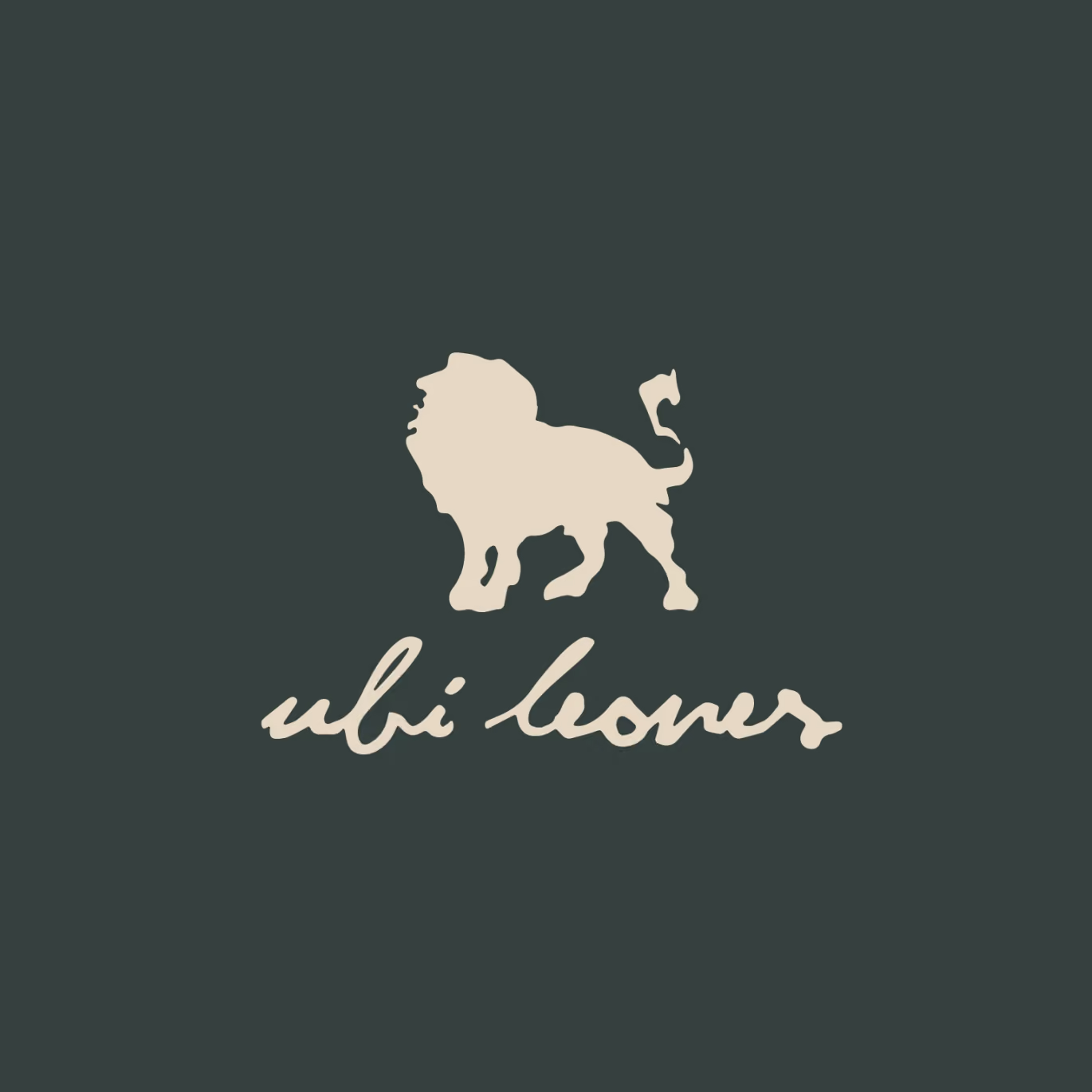
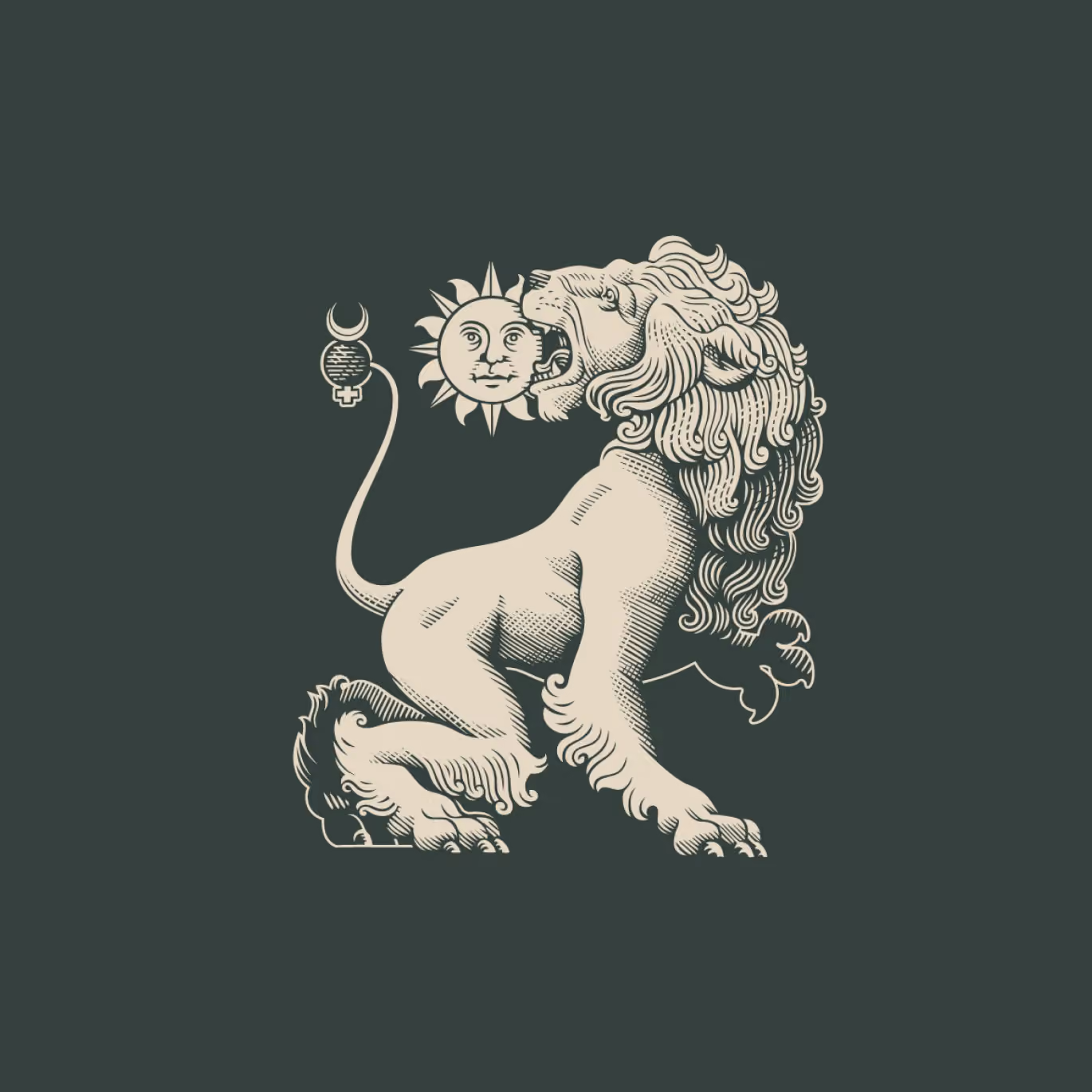
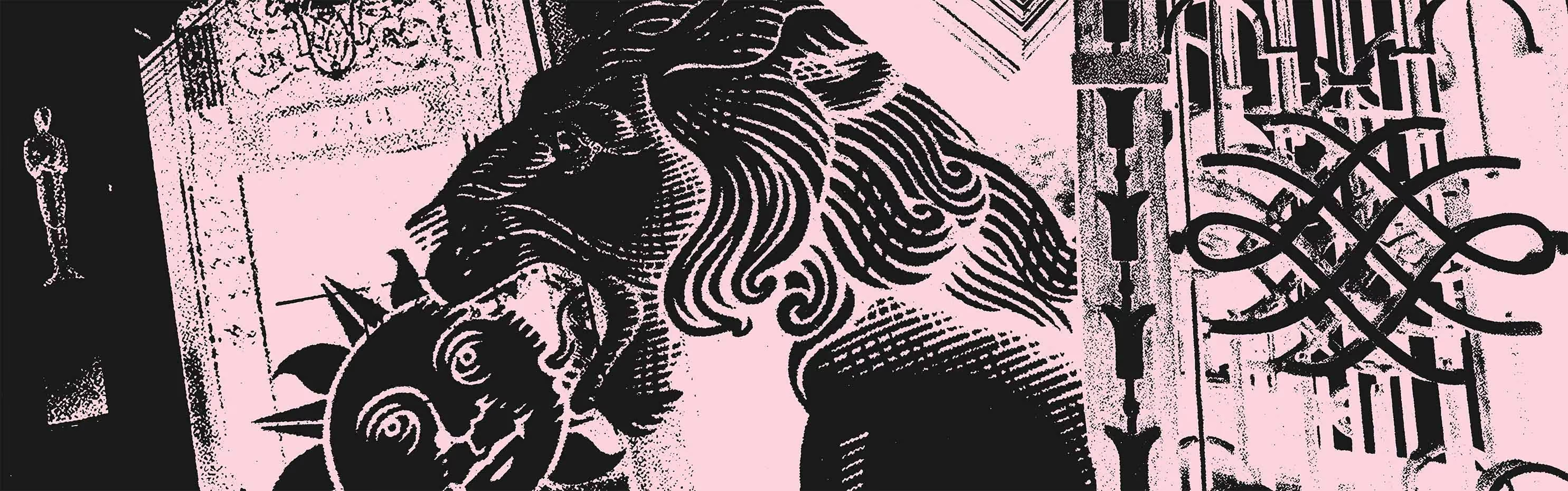
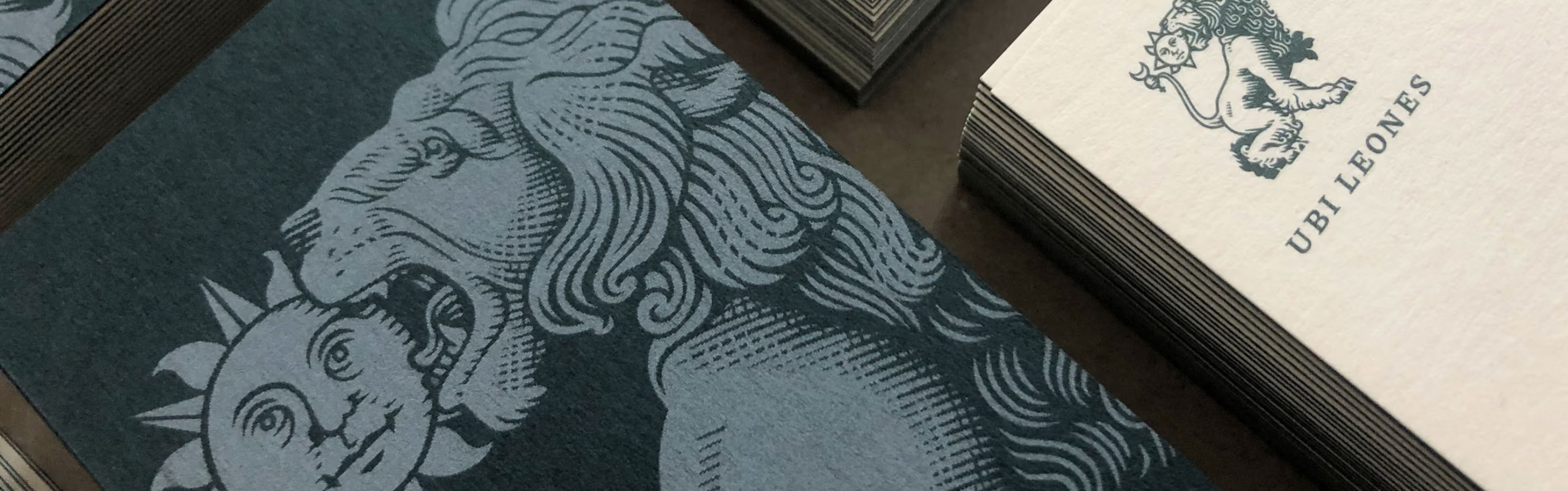
In its original version, Ubi Leones existed as a traced mark, the result of an automatic conversion of an image into a logotype. As part of the rebranding efforts, we began collaborating with illustrator Marcello Crescenzi. We redrew the engraving of the alchemical green lion as a scalable logo.
Collaboration: Dr. Borys Kosmynka
The most interesting aspect here is the distinction between an illustration and a mark. A lion can be rich, expressive, full of detail, and evoke a historical mood, but a logo must also function effectively in real-world applications. Therefore, we designed two scales for the mark: a simplified version for small applications and a detailed version for larger formats.
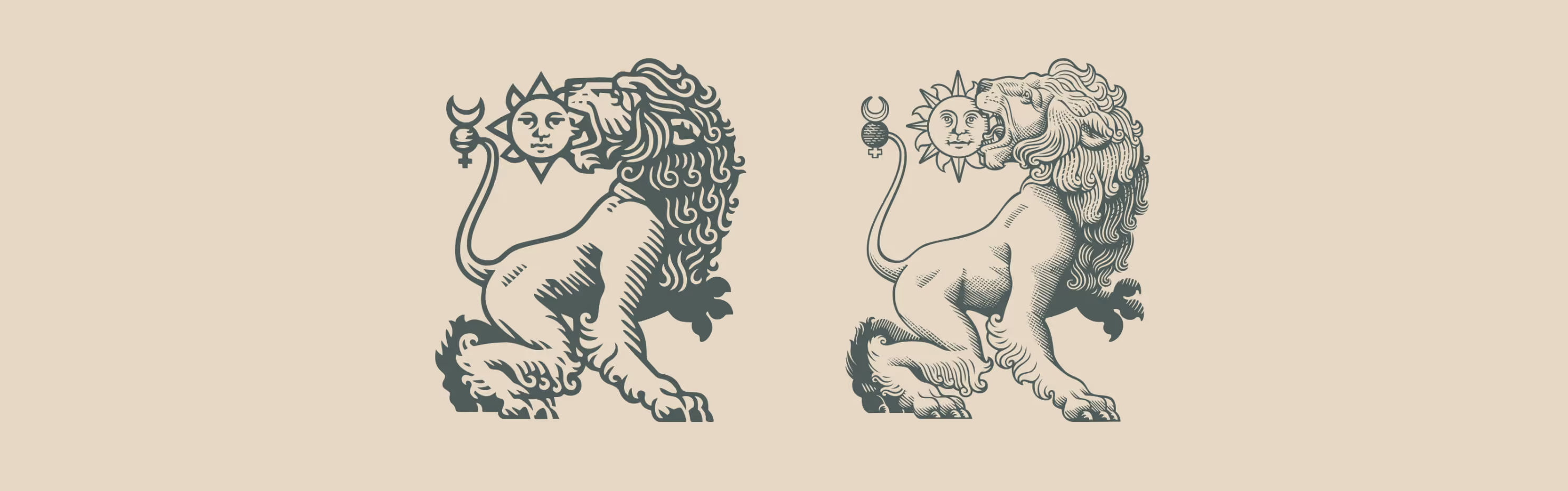
The mark was not "slimmed down" by accident. It was translated into a system. This involved a set of decisions regarding line thickness, number of details, contrasts, highlights, proportion, and also when an illustration can be full and when it must yield to functionality.
Example: Radomszczański and the heraldic-derived logotype
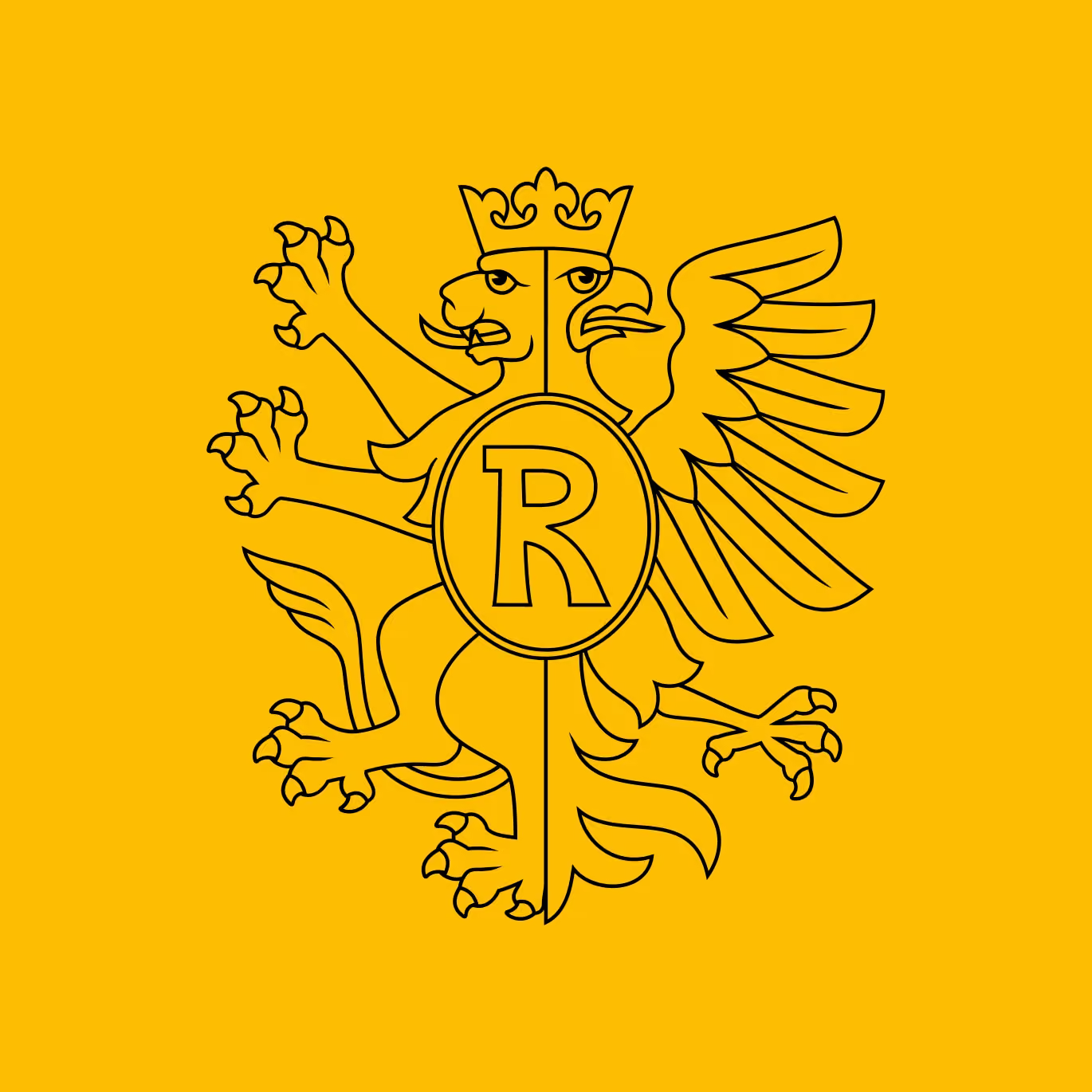
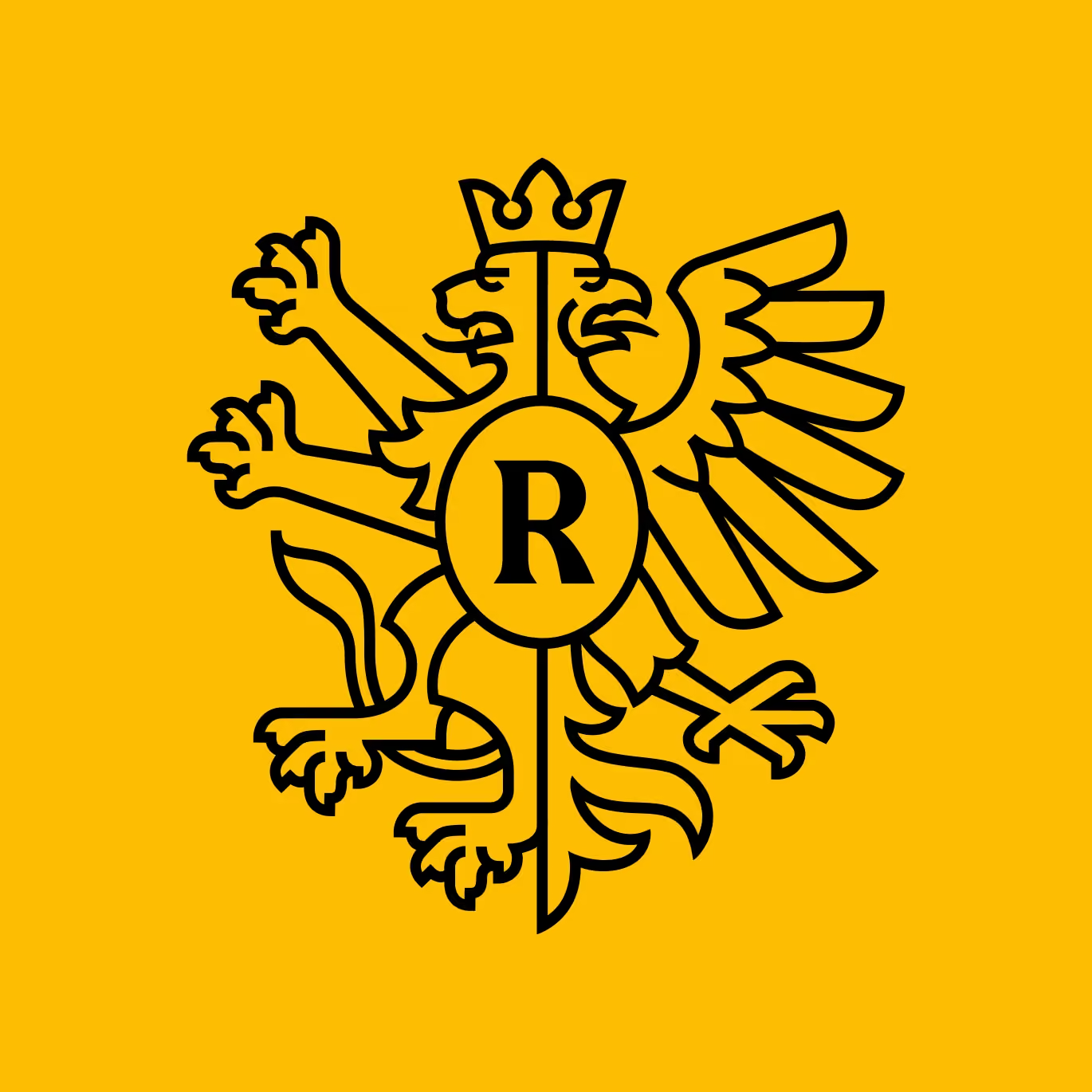
In the case of territorial brands, another responsibility arises: working with a coat of arms. A coat of arms is not just a "pretty badge" that can be simplified at will. It has its own symbolism, history, formal rules, and local significance.
A heraldic-derived logotype is based on the coat of arms but is a clear simplification of it. The goal is not to turn the coat of arms into a trendy pictogram, but to find a modern, functional layer of identification that respects the heraldic source while being effective in promotional communication, on websites, social media, informational materials, or event branding.
Furthermore, a logotype has a less formal function than a coat of arms and is used in different circumstances. A coat of arms serves an official, representative, and formal role. A heraldic-derived logotype can function as a place brand. It can be closer to residents, tourists, events, stories, and daily communication. However, its source must still be recognizable.
Therefore, redrawing a coat of arms into a heraldic-derived logotype involves working on several levels.
Firstly, it's essential to understand which elements are symbolically inviolable. Secondly, one must identify which details can be simplified without losing meaning. Thirdly, the mark needs to be designed so that it doesn't compete with the official coat of arms, but rather creates a more communicative and flexible version of it.
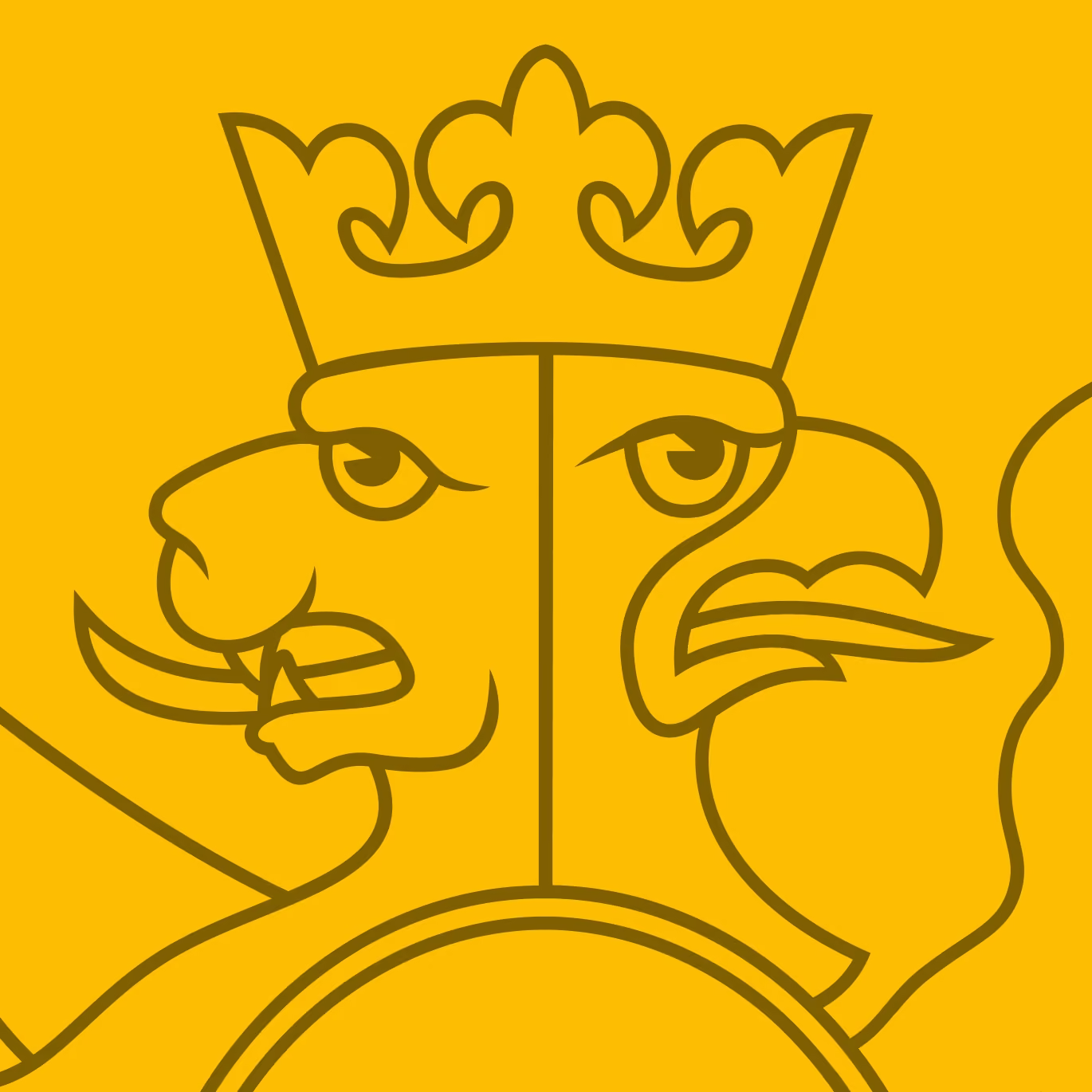
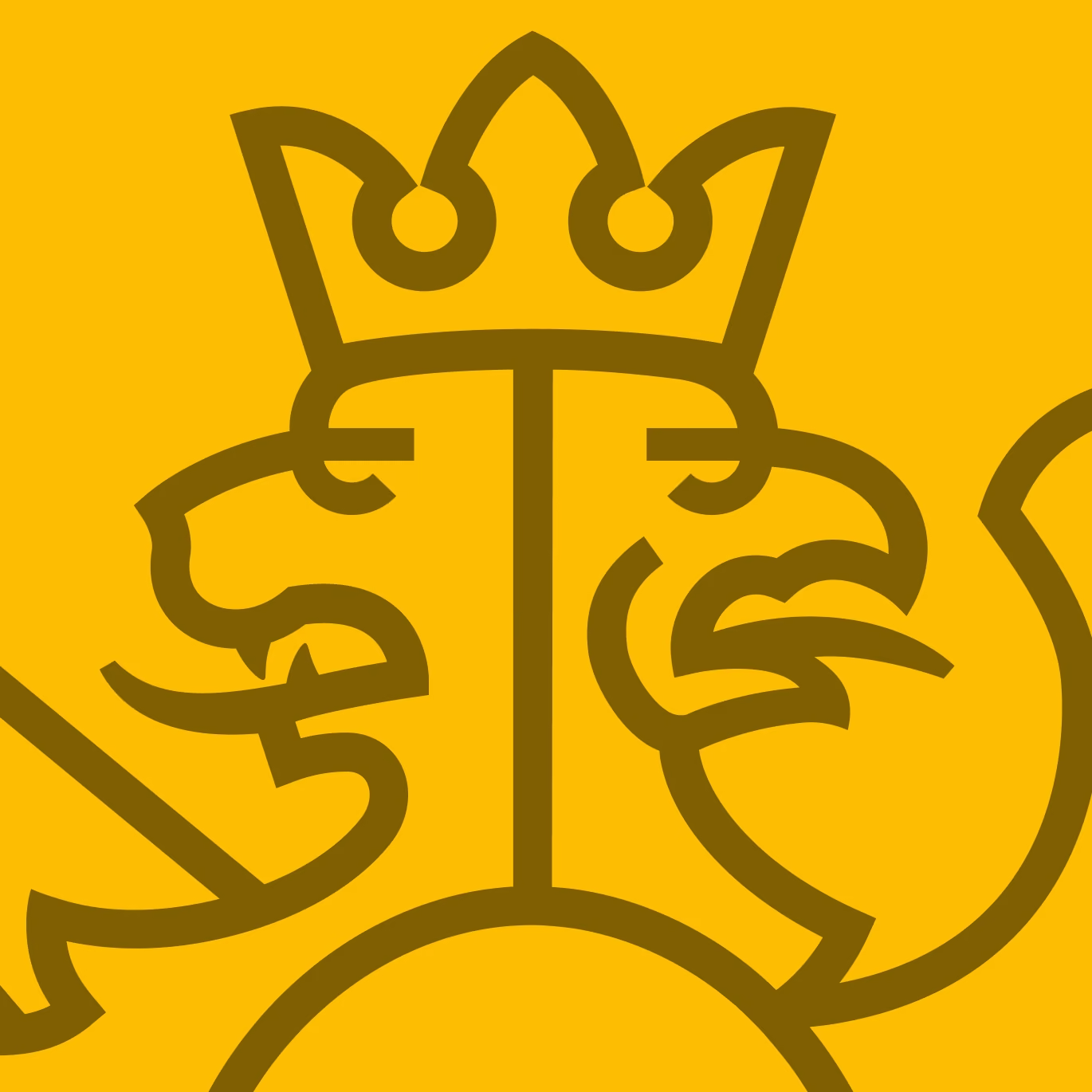
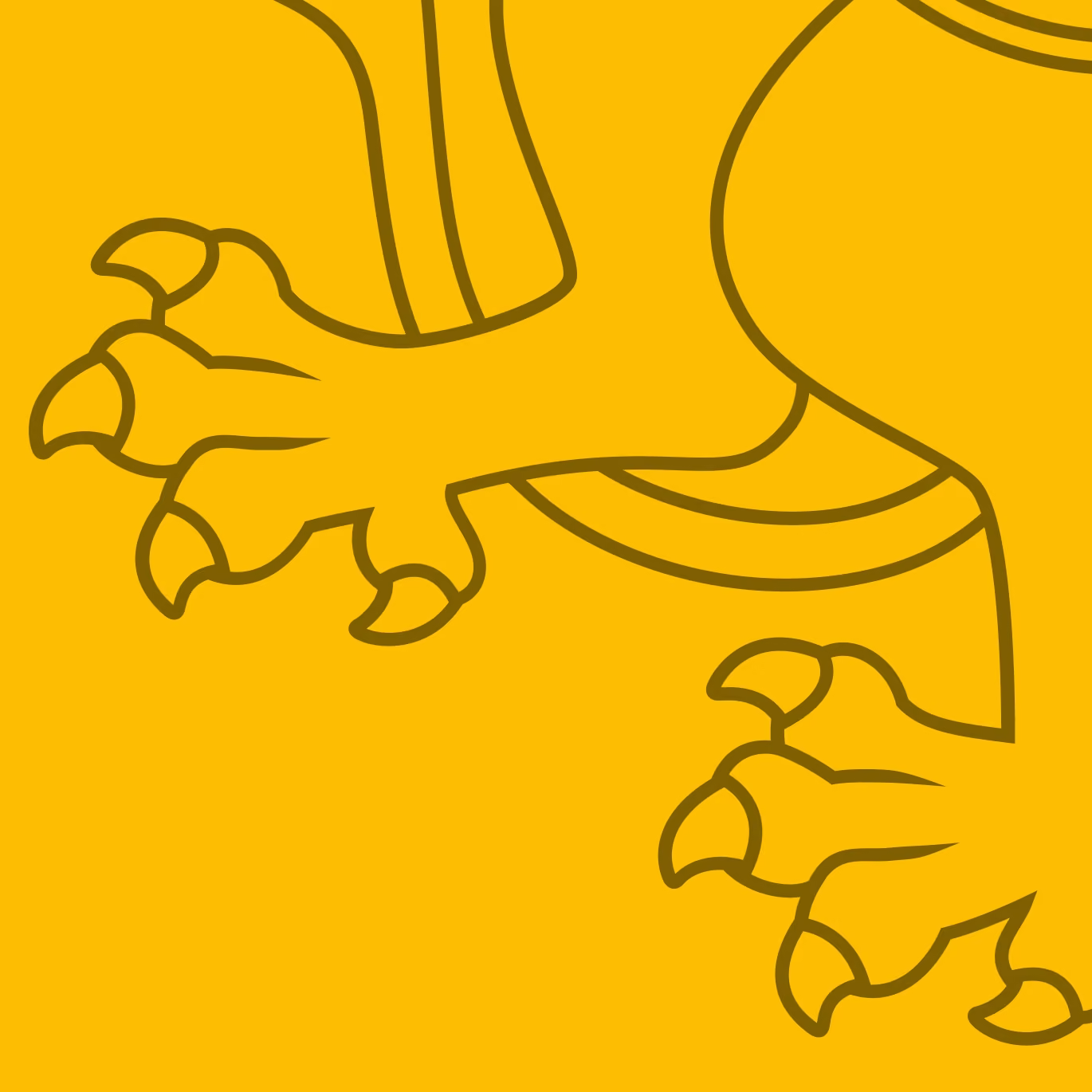
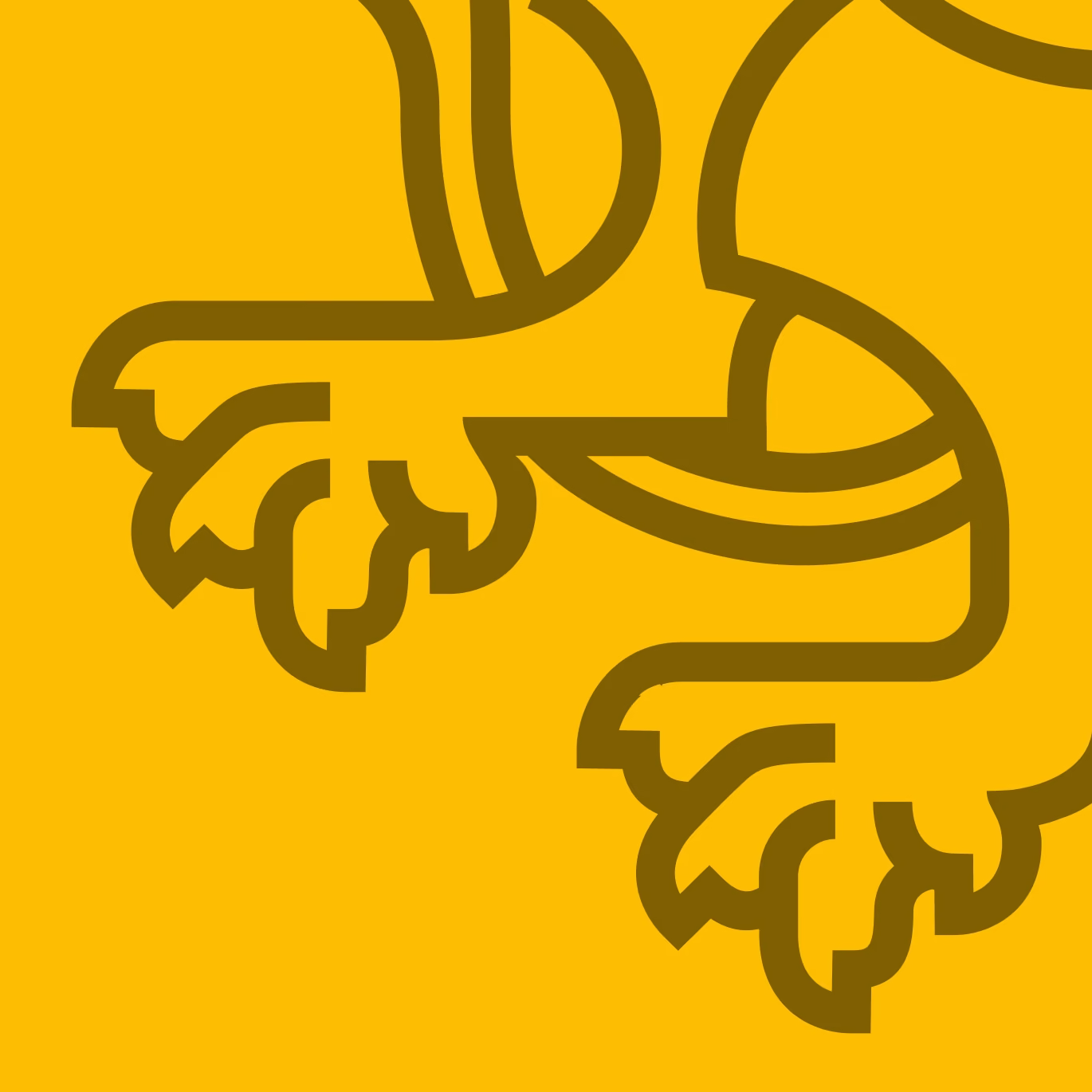
Fourthly, once all the above points have been considered, we can focus on attempting to convey the visual character of the coat of arms itself in a new interpretation. Should we render it in a monolinear style, where should we introduce contrasts, and how will the practical scale of the emblem influence its details? Scale is often a primary factor in determining what elements are retained and in what form. In this instance, we chose to significantly simplify the details of the eyes and claws in the depiction of the half-eagle with a griffin – at a small scale, there simply isn't enough "resolution" for these details to be as prominent as they are in the district's original coat of arms.
.avif)