.avif)
To start with, in an ideal world, a logobook, brandbook, and other similar documents are documentation of completed branding—a summary material:
- designed
- approved by the client
- tested in production
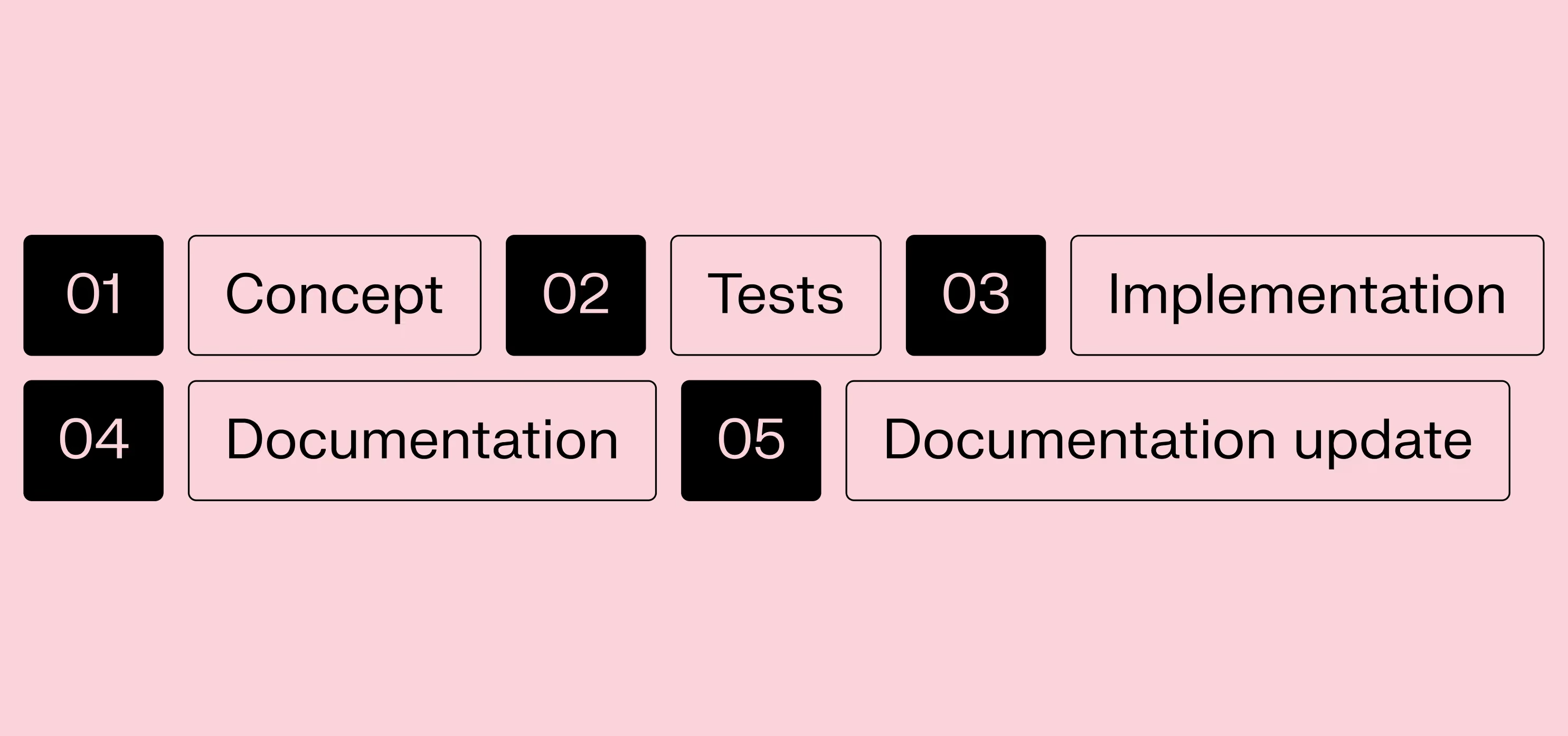
brand assets. It is, therefore, the result and summary of a comprehensive visual identity project, not the starting point. I mention this because there are briefs that list a brandbook or logobook as the subject of the order. Here, I strongly recommend the following process:
concept → implementation → testing → documentation → documentation update
This also leads us to the second point: the immutability and durability of such documentation. A consistent, functioning brand is updated regularly. The same should apply to its documentation. Remember that guidelines—in any form—should reflect reality; they cannot be dead-letter laws.
[Brand Coherency ad window]
Let's move on to terminology. In the world of branding, there are many terms: logobook, brandbook, logo tag, abridged logobook, brand guidelines, visual identity manual, corporate identity manual and others. The differences between them mainly come down to the scope, level of detail, and function of the documents. One rational rule is: make sure what kind of documentation you are ordering and what it is intended for.
Logobook / Logo Manual
A logobook, as the name suggests, contains basic guidelines for the logo itself. It does not cover documentation for colors, typography, etc. It can be part of a comprehensive study—either integrated or as a separate document. A brandbook should include such a section :)
- Scope: only the logo and how to use it
- Content: logo construction, color variants, clear space, minimum sizes, prohibited uses.
- Nature: a technical, narrow document focused on the consistent and correct use of the logo.
- Synonyms: logo manual, logobook, brand mark manual, symbol guide.
- Typical use: small and medium-sized brands, basic starter document.
Abbreviated logobook / Logo tag
A small logobook. Often a one-pager. Is it worth having? Definitely – either as a logobook or an abbreviated logobook (we call this document a logo tag) – if only as a set of basic rules to send along with your logo package whenever someone uses your logo externally (e.g., in a partner or sponsor bar) or produces something with your logo (e.g., merchandise).
- Scope: the absolute minimum.
- Content: basic logo versions, colors, sometimes fonts; clear space.
- Format: 1–3 page PDF, often included in the logo file package.
- Synonyms: mini guide, brand card, logo tag.
- Typical use: print shops, subcontractors, partners – a quick reference guide, without strategy or unnecessary details.
Brand guidelines / Visual identity guidelines
Often used interchangeably with a brandbook. A summary of the brand's full visual documentation. It describes not only the logo and typography but also specifies templates, proportions, illustrations, and photography styles. In short – this is where you explain all existing materials and provide guidelines for creating new ones.
- Scope: entire visual identity.
- Content: logo, color palette, typography, grids, layouts, photo and illustration style, application examples.
- Nature: a practical tool – shorter and simpler than a brandbook, but broader than a logobook.
- Synonyms: brand guidelines, brand style guide, visual manual, identity manual.
- Typical use: often in larger organizations. A simple rule: if you have designed materials, not just a basic brand, you should have documentation for them :)
Brandbook / Brand manual
A brandbook in the full sense combines all the information we have about a brand – simply put: strategy and design. In more detail: everything we should know about brand positioning, its place in the market, target audience, products, and services (an aspect we often forget). Then – design and documentation of materials. And the logo, too. Should this material be updated? Of course! Does it save us a ton of time in our daily work? Definitely.
- Scope: full brand identity.
- Content:
- strategic elements: who, what, how, why, and in what context, positioning, tone of voice, communication style, and the less tangible aspects: mission, values, personality,
- visual elements: logo, colors, typography, layouts, photography style, and iconography
- implementation examples: print, social media, packaging, website.
- Nature: a master document – it combines strategy, communication, and visual identity.
- Synonyms: brand book, brand manual, corporate identity manual, brand identity guide.
- Typical use: medium and large brands that want to manage their communication consistently. Again, a simple rule applies – it is worth having one document that contains everything you need to know about the brand, without having to send dozens of separate files.
Design system
We write about design systems here: LINK
This is a complete functional library for a brand. It is particularly useful if the brand has a design or development team that works on its materials on an ongoing basis.
- Scope: the digital evolution of brand guidelines.
- Content: tokens (colors, spacing, typography), UI components (buttons, forms), Figma libraries.
- Nature: a living library for developers and UX/UI designers to work with.
- Typical use: digital products, applications, SaaS platforms, as well as any work involving digital assets (including social media post templates).
Other terms, alternative solutions, history of branding
There is also a whole set of supporting, complementary, or simply less frequently used (or obsolete) terms. Here, too, we recommend first discussing what scope is actually needed – it is the content, not the name, that is key. This is why the term "visual identity system" in a request for proposal can often be interpreted differently by various vendors.
VIS – Visual Identity System
In practice, this means brand guidelines – everything we know about the brand, excluding strategy and positioning.
In practice, this often involves only inspirational imagery rather than full technical specifications and a systematic approach to materials. Because we develop functional templates, we strongly recommend a more comprehensive practical approach rather than one that is purely visual.
- Definition: A cohesive system of a brand's visual elements and the rules for their application.
- Scope: Includes the logo, colors, typography, layouts, graphic style, and implementation examples—effectively acting as a logo book, visual guidelines, and brand guidelines.
- Nature: In the Polish market, this is an umbrella term that can refer to anything from a simple logo manual to an extensive visual identity handbook.
- Relationship to other documents:
- logo manual = basic visual identity module
- brand guidelines = expanded visual identity
- brandbook = visual identity + strategy and communication
Style guide
An alternative term for brand guidelines. It most often refers to a specific aspect within a larger organization (e.g., a photography style guide or an editorial style guide). It can be part of a comprehensive document.
- Scope: Can cover language (editorial style guide) or visuals (visual style guide).
- Content: Rules for communication style, tone of voice, punctuation, layouts, and iconography.
- Nature: More technical than a narrative brandbook.
- Typical use: Tech companies, editorial teams, and content marketing.
Corporate Identity Manual
This term is falling out of use. In practice, it is usually an extensive brandbook that tells the complete story of a brand, including how it is applied in corporate settings (often touching on HR matters, such as employee appearance or communication).
- Scope: Historically, these were often very extensive documents for large corporations.
- Content: Visual identity + guidelines for office architecture, vehicle fleets, employee uniforms, and promotional materials.
- Nature: A heavy, formal document—now used less frequently and largely replaced by the brandbook.
Summary
- The logo tag and logobook abbreviation are minimalist, purely technical solutions.
- The logobook and guidelines are mid-level documents focused on visual consistency.
- The brandbook is the highest level, combining strategy, communication, and visual identity.
- The design system and style guide are specialized extensions (digital, language).
.avif)

.avif)
.avif)