.avif)
We treat social media not as an add-on to branding, but as its functional extension. Every post, story, or video is a micro-expression of the brand: its language, tone, aesthetic, and rhythm. Our goal is for all these elements to align into a cohesive system that the team (whether a social media agency or the client's in-house team) can maintain independently and stress-free.
Why it matters
Most brands start their social media communication with an idea rather than a system. This might work for a few weeks—until chaos sets in: inconsistent colors, a shifting tone, and disjointed visual concepts. Posts become random, and the team loses sight of what fits the brand and what doesn't.
We start in the reverse order (which is the correct one ;) – by organizing the language and content structure first. Only then do we move on to aesthetics. This ensures the feed isn't just a collection of random graphics, but a consciously designed stream of communication.
What it means to "develop social media"
Developing social media, as we define it, is both a strategic and a design process. We combine brand analysis, communication language, and visual design into a coherent operating system that can be scaled in day-to-day operations.
We are not a social media agency. We don't manage channels or create daily content. We build the frameworks and tools that allow you to do it well—on your own, with your internal team, or with the agency you work with.
In practice, we work in coordination with your social media agency or internal marketing team, ensuring all parties speak the same language and operate under the same principles. We design the system and tools, while the agency handles the content and publishing.
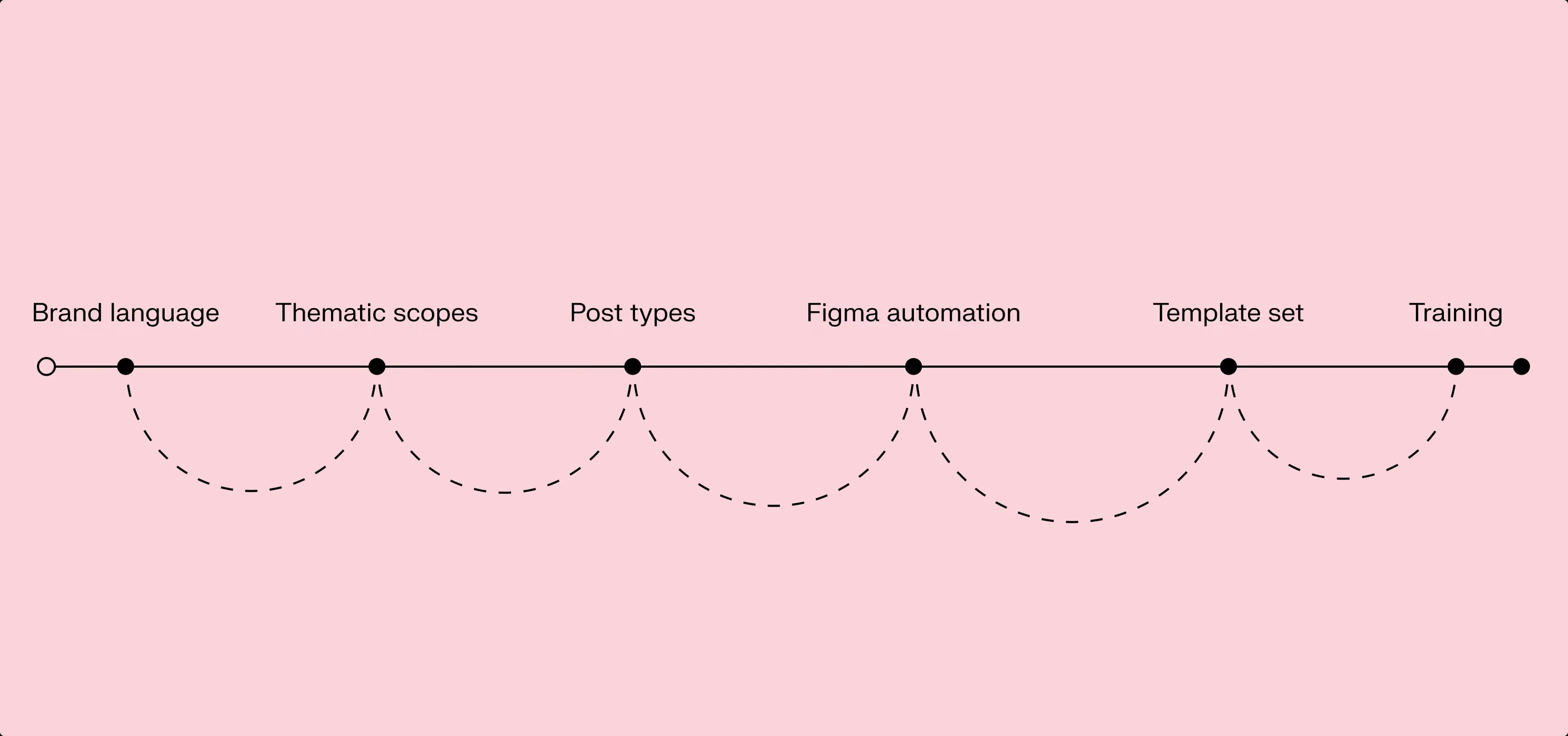
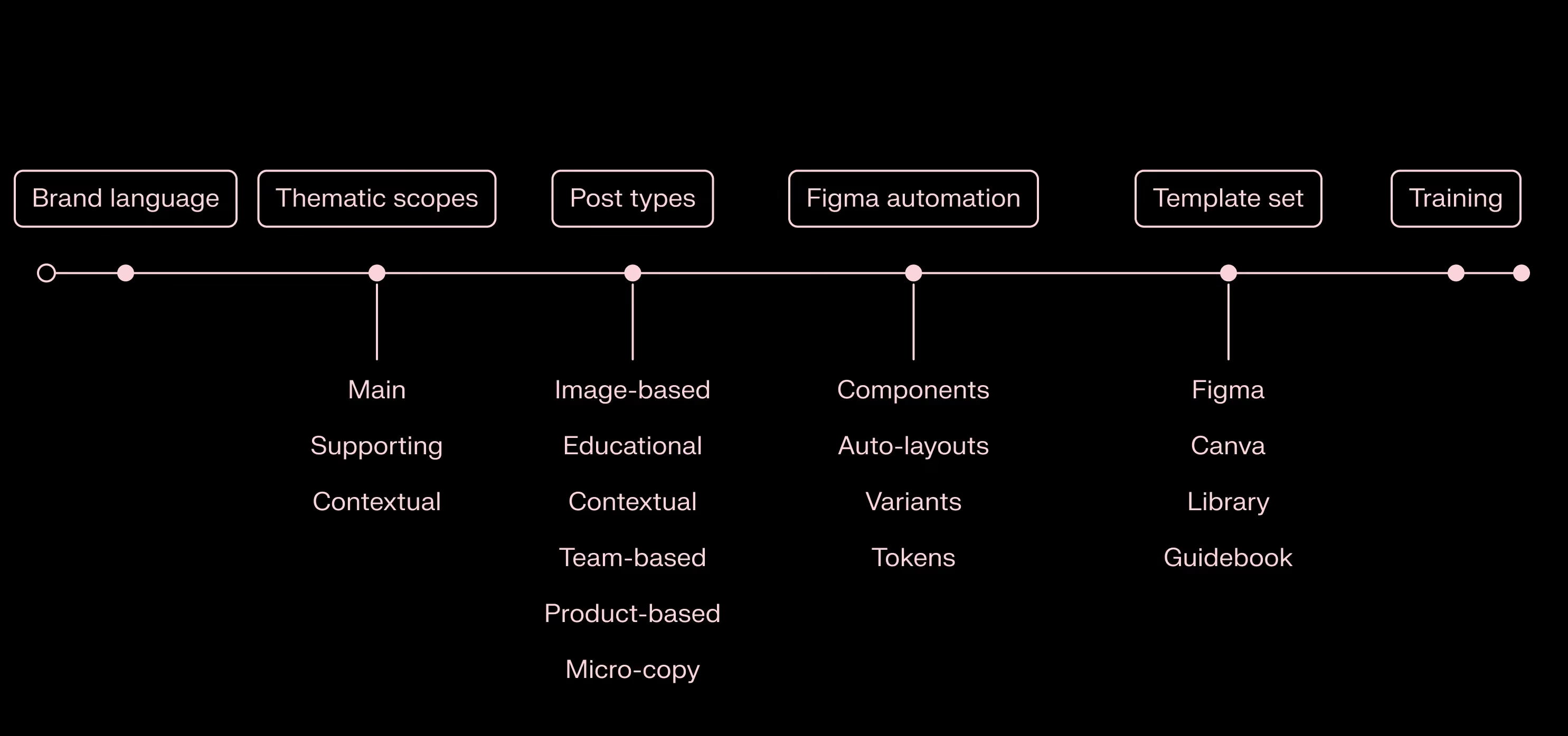
Step-by-step process
- Confirming the brand language
We start with language. We define how the brand speaks and how it doesn't—what words it uses, how it builds sentence rhythm, and what emotions it reinforces. This is the stage where we establish vocabulary, tone, and communication dynamics. The result is a simple document that guides the process of writing posts, captions, bios, and seasonal announcements. This ensures that everyone publishing on behalf of the brand sounds consistent with its personality.
- Defining thematic pillars
The next step is to map out the main pillars of communication. For some brands, this will be product and education; for others, it might be team relations, industry insights, values, or behind-the-scenes content.
We create a content structure that organizes the message:
- core topics (brand identity, mission, and promise),
- supporting topics (products, services, know-how, people, market context),
- light and contextual topics (holidays, events, news, Q&A).
This helps maintain a balance between sales-driven content and content that builds trust and resonance. This part can be handled by us or included as part of a design brief from your agency or social media team.
- We design post types
Every channel needs repeatable formats that make planning and maintaining a rhythm easier. We create a set of post types, each with its own consistent visual and linguistic rules.
Examples of the types we design:
- Brand post – highlights brand values, style, and visual rhythm.
- Educational post – explains, demonstrates, and clarifies (in carousel or short-text format).
- Contextual post – reacts to industry events or current news.
- Team / backstage post – showcases the people and the process, adding authenticity.
- Product or case study post – demonstrates application, results, and real-world examples.
- Microcopy post – a short, rhythmic, often one-sentence visual and text message.
For each category, we develop guidelines for:
- text length and structure,
- type and style of imagery,
- graphic-to-content ratio,
- colors, margins, and typography,
- usage examples and "don'ts" (what to avoid).
This way, your team doesn't have to "reinvent the wheel" – they simply choose the right post type and fill it with content.
- We work in Figma – systematically, not ad hoc
We recommend working in Figma rather than Canva. Canva is fine for simple adaptations, but not for designing visual systems.
In Figma, we build a library of components and design tokens that align with your branding elements (colors, typography, layouts, illustration style, and photography). This ensures your social media feed follows the same design principles as your website and brand presentations.
We create automations that streamline your daily workflow:
- post components with dynamic fields (e.g., quotes, titles, dates, series numbering),
- auto-layouts that adjust proportions and spacing based on text length,
- stylistic format variants (e.g., light/dark mode, versions with photography vs. illustration),
- export tokens for quickly generating ready-to-use graphics in various formats (square, portrait, stories).
As part of the implementation, we also show you how to automate file exports and connect the system with your social media scheduling tools.
The result? Your team can prepare weeks of content in just a few hours—without sacrificing quality or consistency.
- We provide a set of templates and documentation
The outcome is a cohesive social media communication system, not just a collection of individual graphics.
We deliver:
- a complete set of Figma templates,
- export versions for Canva (if there is no designer on your team),
- a library of sample posts,
- a mini style guide (covering tone of voice, publishing best practices, and how to pair text with imagery).
This package allows you to maintain consistency from day one—regardless of who on your team is handling the posts.
- We train your team and implement automations
Finally, we conduct an onboarding session—either live or via a recording. We demonstrate:
- how to plan posts and build a content calendar,
- how to use Figma automations (e.g., generating series of posts, exporting multiple variants at once),
- how to maintain a visual rhythm and keep your feed consistent over time,
After the training, every participant will be able to update content independently, maintain consistency, and respond to ongoing communication needs.
If needed, we can also work with your social media agency to define roles: who writes, who designs, and who publishes. This ensures every part of the system stays in sync.
The bottom line
Once the system is implemented, social media stops being a chaotic collection of ideas and becomes an organized communication channel.
The team gains a tool that provides control, saves time, and maintains quality—regardless of whether posts are created by an agency or an in-house marketing department.
The brand gains recognition—the audience identifies it not by the logo, but by its voice, rhythm, and way of speaking. And that is the goal: communication that works on its own because it was well-designed.
.avif)
.avif)
.avif)