.avif)
We define brand resonance as a simple test: does what a brand says and promises align with what a person actually experiences? If it does, then messaging, behavior, and experiences start to click. The audience recognizes the brand by its tone of voice, visual identity, pace of work, and quality of interaction. Not because the logo is pretty, but because everything forms a cohesive whole.
This is expanded brand consistency—not just what we broadcast as a brand, but how it resonates with the audience. We treat resonance as the result of consistent work across strategy, design, and customer experience (CX). A project starts with purpose and ends with details that can be seen and felt. Not the other way around. This allows us to stop chasing trends and start building something that works today and a year from now.
Why it matters
Most brand problems don't stem from a lack of "pretty design" (though those exist, too), but from disconnects in communication. One thing on the website, another in sales. One thing on social media, another in the offer. One thing from management, another from customer service. As a result, people don't know who they are dealing with. They lose time and trust. And when trust is missing, there are no sales and no referrals.
Resonance solves this at the source. It organizes the promise, the language, and the experience. The side effect is pleasant: less improvisation, less firefighting, and fewer random decisions. The team knows where they stand. The customer does, too.
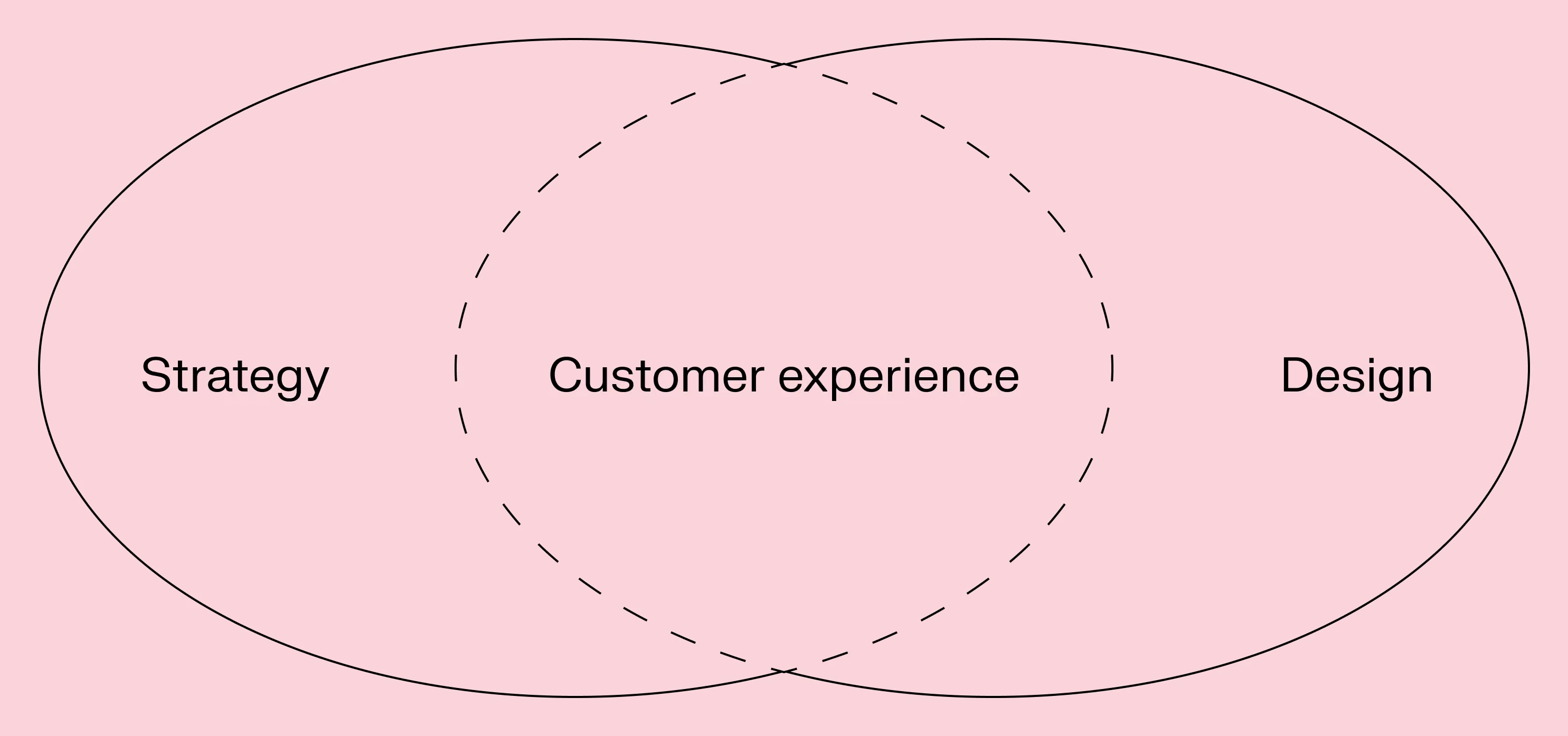
Customer experience as the core of the branding process
Customer experience, or customer experience is not just an "extra chapter" in a brand book. It is the backbone. If a brand is to be recognizable and credible, every touchpoint must stem from the same principles. It sounds simple, but in practice, it requires working on three levels at once.
- Strategy.
Why the brand exists, who it is for, and what principles guide it. What it promises and under what conditions it delivers on that promise. This is where a simple language for talking about the brand is created—one that is understandable for management, sales, and production.
- Design.
How it looks and how it sounds. A system, not just a "set of pretty slides." This means: shared rules, libraries, tokens, content patterns, and examples of good and bad usage.
- Experience.
How it works in reality. User journeys, customer service, pricing, forms, deadlines, returns, downloads, and post-order emails. The mundane things. If there is order here and alignment with the promise, resonance emerges.
These are not stages to be checked off one by one. We work in parallel because a strategy without testing it in the experience quickly falls apart, and design without strategy and CX is just graphic decoration—a poster.
What makes up resonance.
Below is a list of areas that either create or kill resonance.
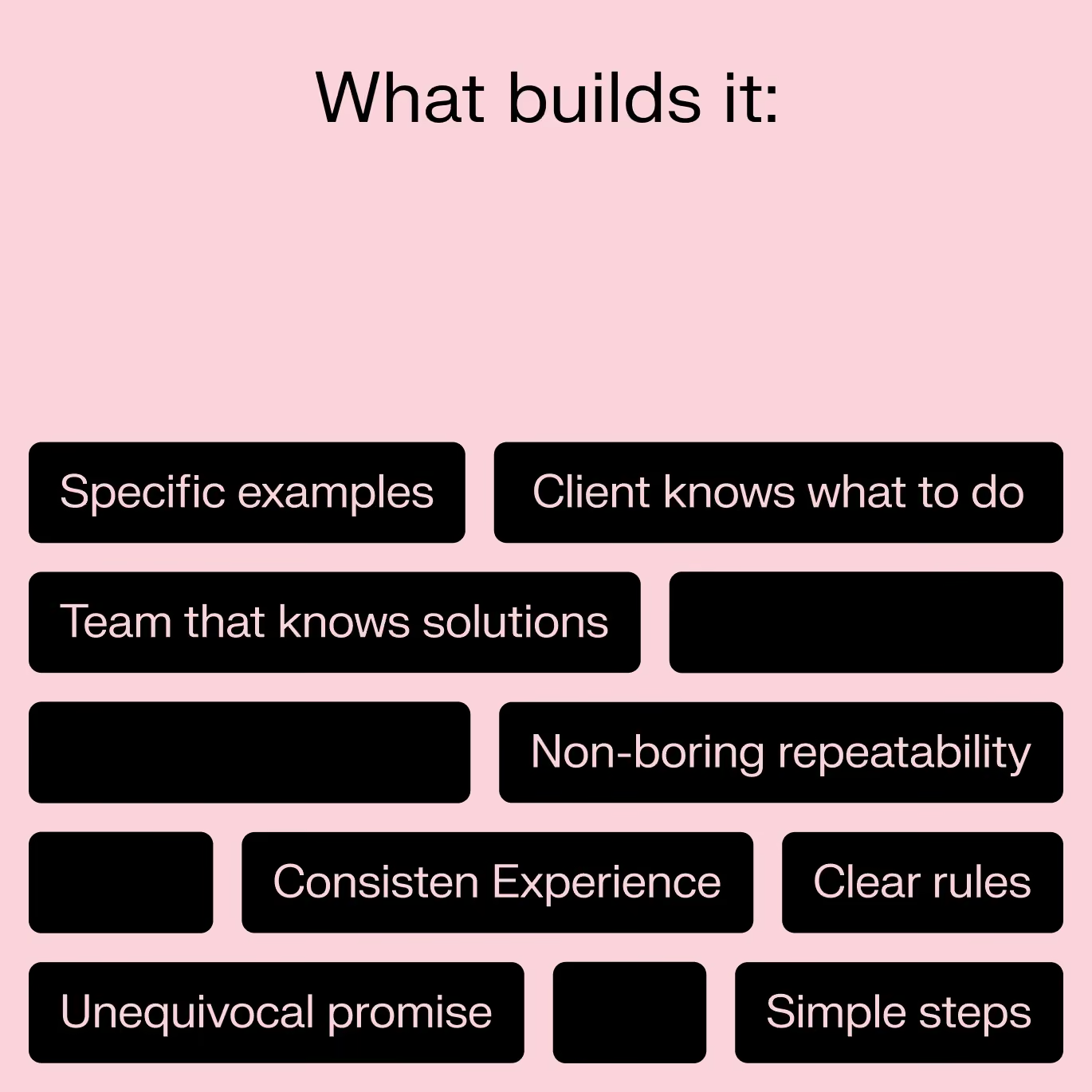
What builds it:
- A clear promise and concrete examples of how you deliver on it.
- A consistent way of speaking and presenting that doesn't get old after a week.
- Simple steps for the client: I know what to click, who to write to, and when I'll get a response. Clear pricing rules and offers without the fine print.
- The same experience across different channels: website, email, phone, PDF proposals, social media. A team that understands the purpose of the solutions and doesn't have to reinvent the wheel for every situation.
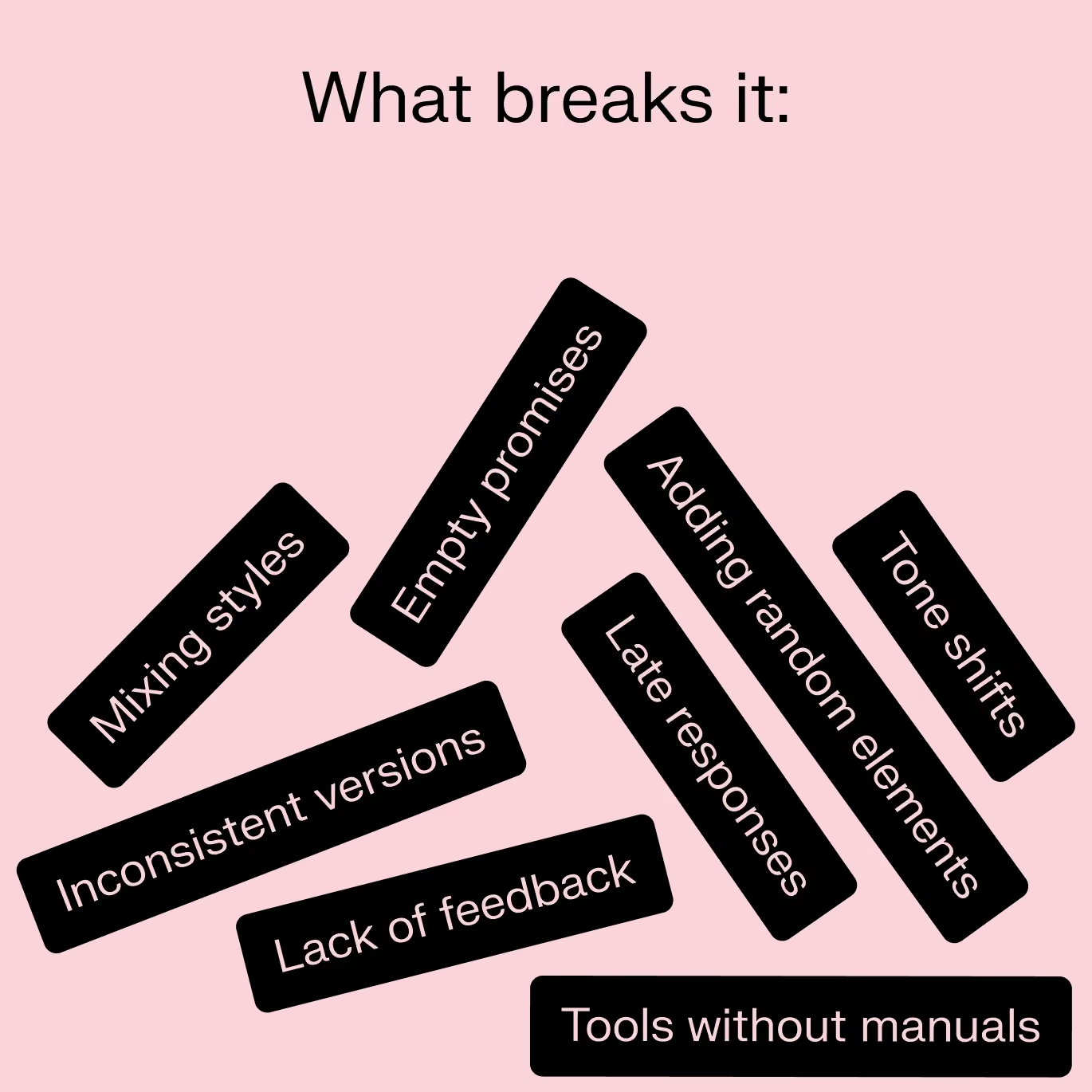
What breaks it:
- Empty promises.
- Mixing styles and adding elements just because they look nice.
- Tone shifts depending on the author's mood.
- Tools introduced without instructions on how to use them.
- Ten different versions of the same offer in circulation.
- Missed deadlines and a lack of feedback.
How we build resonance in practice
Audit of purpose and materials
We review what already exists: website, proposals, decks, sales presentations, post-order emails, social media, printed materials, the product, and helpdesk. We look for recurring inconsistencies and areas that are working well. We draw conclusions and set priorities.
Order in your promise and language
We build a communication framework: what we promise, to whom, in what variation, in what tone, which words we use, and which we avoid. We document it so it can be used every day. This is the starting point for copy, presentations, and client conversations.
A system instead of just graphics
We design a design system, not just a pretty layout. Tokens, libraries, components, styles, and variants. This ensures that everything the team creates has a solid foundation to grow from, and that every new element can be integrated without reinventing the wheel.
Customers and their journeys
We map journeys in detail and with care. This helps us decide which elements to prioritize. We shorten steps, streamline forms, and organize post-action messaging. We set standards for response times and content. Along the way, we create templates for emails, proposals, briefs, and invoices.
Pilot and refinements
We implement in one product or service line. We measure, collect feedback from the team and customers, and make adjustments. Only then do we roll it out across the board.
Documentation and training
We write down the rules in a format that is genuinely helpful and serves as a handbook. It includes strategic, visual, and operational sections. We train the people who will be working with it. Without this step, everything will revert to square one.
Maintenance
A quick refresh and review once a quarter. What’s working, what’s drifted, and what needs to be added. A brand is alive, and we treat our documentation the same way.
How to measure results
It’s not about massive studies. Simple metrics are enough, provided they are collected systematically.
Consistency:
three randomly selected materials from the month. Do they look and sound like one brand?
Response time and quality:
does the customer receive a response within the promised time and in the established tone?
Usability:
how many decisions does a basic task on the website require? We count clicks and reported issues.
Clarity of the offer:
how many questions come back to the salesperson regarding the same issue.
Language repeatability:
what customers say in their inquiries and reviews. Do these align with what we say about ourselves?
Returns and complaints:
not just the numbers, but the content of the justifications. Do they match our promise?
This is enough to see if resonance is building. If not, exactly where it breaks down.
A real-life example. Three small moves, big impact
A B2B company with a long PDF offer, several pricing variants, different versions of emails from sales reps, and a general impression of "lots of content, little meaning."
What do we do?
- We establish a single offer framework (a functional template) and three variants, along with short descriptions of "who it's for, when, and what it doesn't include."
- We streamline the language. Words we use consistently. Words we don't use. A few simple examples
- We set response rules: when to call, when to reply, what goes in the first email, what's in the follow-up, and when to close the loop. We create action workflows.
After a month, the number of questions about "what exactly is included" drops, email exchanges shorten, and the percentage of closed cases without escalation increases. It’s simply a sense of order that the other side can feel. At the same time, the actual time required to prepare an offer decreases.
Summary
Brand resonance is the result of consistency between word, image, and behavior. It doesn't happen on its own. It requires making a few simple but consistent decisions and maintaining them over time. That’s why at LNV°ST, we work on strategy, design, and experience simultaneously. We organize the brand promise, create tools for daily work, and ensure that what we’ve built is sustainable.
Bonus: What you can do on your own today
If you aren't sure how to start or how much support you need, you can begin working with your team and come to us with an initial diagnosis. The first steps are:
- Collect three random materials from the last month and check if they look like they come from the same brand. If not, list the differences.
- Open your latest proposal and cut it in half. Keep only what the client needs to make a decision.
- Review all automated emails. Can they be understood without any context?
- Go through your entire purchase journey from A to Z. Note every moment of hesitation.
- Ask three team members to describe what your brand is and who it is for in a single sentence. If the answers differ, start with your messaging.
.avif)

.avif)
.avif)